I’m not a millionaire (yet), nor am I financially independent (yet). But I still get to spend most of the year living and traveling overseas with my wife and daughter. We live an extremely comfortable lifestyle on around $45,000 per year.
How?
The short answer is a mix of remote work, passive income from investments, my wife’s stable job and benefits, and intentional frugality. I’ll explain how we do it in more detail, but you don’t need to step into my exact footprints. You have endless options for creating your own ideal lifestyle with your own sources of income.
Like most paths to financial independence, however, it starts with getting extremely intentional about your spending.
Keeping Expenses Low
The more you spend, the harder it is to reach your financial goals. That’s the paradox of wealth: The more “wealthy” your lifestyle, the less actual wealth you build.
A low savings rate hampers you in two ways. First, it reduces the money going into investments. Second, spending more money sets you up for a higher target net worth in order to reach financial independence. If you follow the 4% rule, for example, every $1 you plan to spend each year in retirement requires you to save $25 in your nest egg.
So, if you want to travel the world while still building wealth and working toward financial freedom, aim to keep your expenses low.
That starts with choosing your travel regions carefully. South America, Eastern Europe, and Southeast Asia offer safe, affordable travel with plenty of fun places to visit. I’ve lived in South America for over four years now, first in Brazil and now in Peru.
Look for options with free or inexpensive housing and accommodations. You could try a home swap, for example—check out HomeExchange or ThirdHome. Or you could house sit or pet sit, using sites such as TrustedHousesitters or Mind My House.
Alternatively, you can find affordable long-term stays on Airbnb or VRBO. My wife and I get free housing through her job (more on that momentarily).
As an international traveler, you won’t have to worry about car-related expenses. That alone saves you an average of $12,182 a year between car insurance, maintenance, gas, and, of course, monthly payments. My wife and I went from two cars to one when we first moved overseas, then to just one, to none around five years ago.
You can score free flights by travel hacking with credit cards. Or research low-cost train or bus tickets. Plan on cooking most meals at home.
I don’t want to go down the rabbit hole of savings tips, but all the regular budgeting strategies apply.
Active Income
If you’ve already reached financial independence, that’s awesome. Most of us haven’t, though, so you’ll probably need some active income.
Personally, I own an online business called SparkRental, along with a partner. Our revenue comes from a mix of online course sales, affiliate revenue, and membership fees from our investment club, which lets members invest small amounts of money in passive group real estate investments. I also do some freelance writing on the side, which creates an income floor.
But in today’s world, you have unlimited options for earning money remotely. Most white-collar/knowledge-based fields have at least some jobs that allow remote work. You could start your own business if you prefer or do consulting work. Or you can work freelance, from graphic design to software development to writing and beyond.
Get creative, and stay open-minded. Go online and research every possibility that occurs to you. I guarantee you’ll find some options that surprise you.
My wife’s job plays a pivotal role in our lifestyle. In fact, we aim to live entirely on her salary and benefits. As a school counselor, she earns the equivalent of a teacher’s salary. But working at international schools, she enjoys fantastic benefits, including free housing, full premium health insurance for our family, and even paid flights home each year.
The stability and benefits from her job free me to pursue work with a higher income ceiling but a lower income floor. Again, you’ll have to find your own system that works for you.
Investing for Income vs. Growth
Some investors look for passive income, others for high growth. As a general rule, younger adults should target growth, and then, as you near retirement, you start shifting your portfolio to favor steady income.
So, where does that leave you if you want to travel the world while still saving for retirement? Fortunately, income and growth investing aren’t mutually exclusive. You can have both.
The growth in asset values helps build your long-term wealth. The passive income can help supplement your active income and pay for your travels.
For instance, you might earn $50,000 each year from gig work while traveling, plus another $10,000 in income from investments to cover your total lifestyle expenses of $60,000.
Just be careful about relying too much on income from investments. In a market downturn, that investment income can dip or disappear. Be prepared to pick up more active income in a pinch.
Keep the following investments in mind as you plan your portfolio as a globetrotter.
Stocks and Safe Withdrawal Rates
In the 20th-century model of retirement, you save up a nest egg over the course of your career, then gradually spend it down in retirement—and hope you don’t run out of money before you die.
The classic example is the 4% rule that I touched on earlier. The idea is simple: In your first year of retirement, you withdraw 4% of your nest egg to live on. After that, you raise your annual withdrawals by the rate of inflation. Based on historical data, a portfolio of 60% stocks/40% bonds should last at least 30 years after you retire.
There’s a lot to dislike in this entire premise. That starts with the risk of running out of money, of course, but I also want to leave legacy wealth to my daughter. The numbers also suck—you collect a measly $40,000 a year on a $1 million portfolio.
You can fix the problem of a shrinking balance by reducing your withdrawal rate. At a 3.5% withdrawal rate, your portfolio should grow indefinitely. But if you save up $1 million, that cuts your annual income down to $35,000.
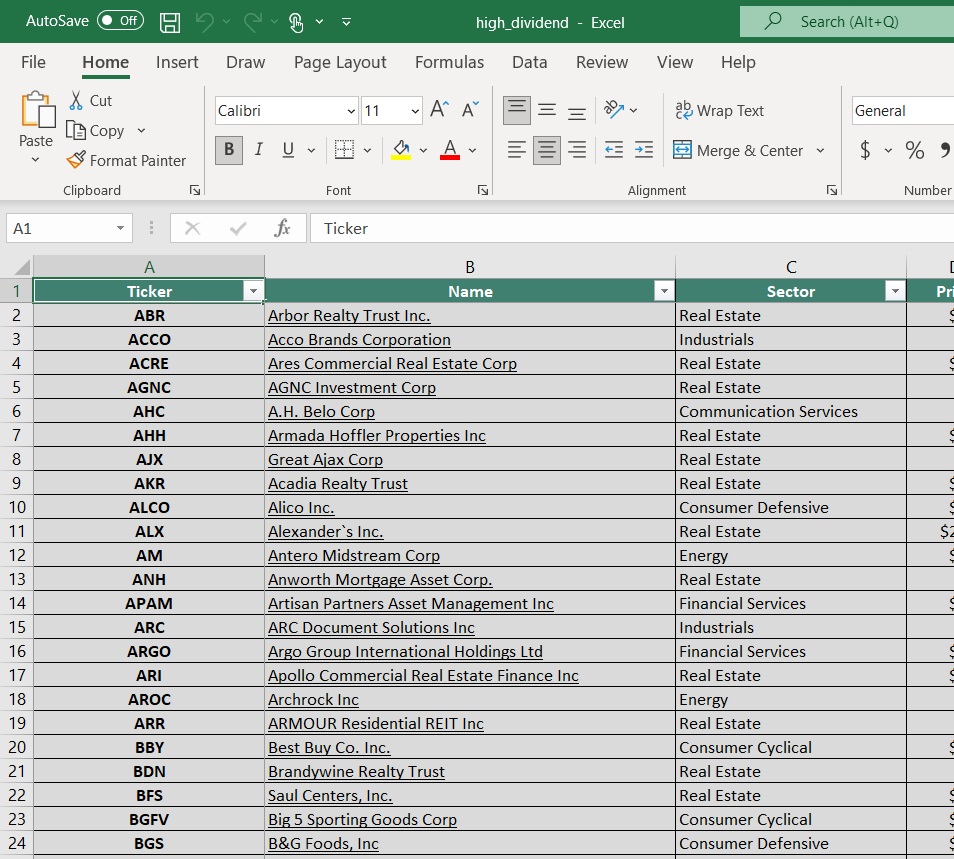
One solution involves investing in high-dividend stocks. Some pay dividend yields over 5% and grow in value consistently (or at least as consistently as any stocks grow). The dividends can supplement your income while you leave your stock holdings untouched to grow over time.
You can also invest in high-growth stocks in your tax-advantaged retirement accounts. Let them grow untouched until you turn 59 and a half (or preferably later) to help solidify your nest egg.
Meanwhile, you also invest in real estate for more immediate income and growth.
Passive Real Estate Syndications
Real estate syndications often pay 4% to 10% distribution yields while targeting a total IRR of 15% to 30%. Like dividend stocks, you can opt to spend the distributions and then reinvest the profits when these properties sell.
Some real estate syndications even target infinite returns. When the sponsor refinances, you get your investment capital back—which you can reinvest elsewhere—but you keep your ownership interest in the property. And you keep collecting cash flow from it, which again can help supplement your international lifestyle.
Personally, I love that these passive real estate investments don’t require any work on my part beyond initial vetting. These are precisely how I invest in real estate nowadays—spreading small amounts of money across many properties in our Co-Investing Club. But, some investors prefer to keep control over each property, and rental properties can serve you here as well.
Rental Properties
Rental properties could see 5% to 8% income yields plus another 2% to 5% annual appreciation. Or more, in hot markets.
Just beware that unlike stocks and real estate syndications, rental properties are not truly passive investments.
I still owned over a dozen rental properties when I first moved abroad. The experience revealed just how much labor those properties had cost me when I was still living in the same city as my properties. Since I could no longer step in myself, I realized just how little I trusted my property manager to do everything right. I also realized that my labor had been a crutch—one that artificially inflated my returns since I hadn’t been counting my labor when I calculated returns.
If you move overseas while owning rental properties, make sure you have a world-class property manager. It can work and earn you solid income and appreciation, but only if you and your property manager move in lockstep.
As a final thought, each rental property you buy ties up tens of thousands of dollars. That makes each property’s performance stressful—factors like rent collection, evictions, and falling occupancy rates keep you up at night. But I invest $5,000 apiece in large apartment complexes, so each individual property’s performance doesn’t stress me out (much). The returns all just average together across thousands of units and dozens of properties.
Hard to Put in Motion, but Then Unstoppable
I won’t tell you that our lifestyle was easy to create. It wasn’t.
It took a ton of work, from my wife joining a recruiting service for international educators to get hired in the first place, to me starting a business, to me extending the runway of that business by doing freelance work. And that says nothing of all the logistical hoops you jump through when you move abroad, from visas to banking to meeting friends to learning languages.
But the end result is a lifestyle entirely of our own design.
We get to live in a luxury three-bedroom apartment with a 180-degree view of the Pacific Ocean. Our daughter attends high-performing international schools, surrounded by kids from all over the world. She has two passports and speaks three languages. We get to visit new countries all the time, and I can work on my own schedule from anywhere. Last December, I took an entire month off work to roam Argentinian Patagonia.
All the while, my net worth has quadrupled in the last five years. I get to live my dream life while making fast progress toward financial independence.
The Bottom Line
Only you know whether the tradeoffs of setting up a location-independent lifestyle are worth it to you. But once you finish the initial work, you can literally live anywhere in the world—often for far less than you’d spend in the U.S.
Note By BiggerPockets: These are opinions written by the author and do not necessarily represent the opinions of BiggerPockets.