“Asking in 2022, will every consumer brand have a web3 strategy one day? is like asking, will every brand have a website one day? in 1994.”
That’s a statement by Adam Brotman, the Co-Founder of the web3 startup, Forum3, and it’s the kind of suggestion that sounds exciting, but is it realistic?
Right now, such a statement makes sense to anyone with a close interest in crypto, but it may otherwise still sound a little esoteric. This, perhaps, has parallels with how a question about websites would have gone down in 1994: meaningful to software developers, perhaps, but not to the wider business world or the general public.
Web3 refers, not surprisingly, to a third iteration of the web. In a nutshell, web1, the early web, was all about reading static content, while web2 enabled users to read, interact with, and create content. Web2 is the current age of social media, self-publishing and alternative media.
Following on from this, web3 is like web2 but with ownership. The web3 vision revolves around decentralization and allows users total control over their own content, digital assets and online transactions. And according to some observers, we are now in the early stages of a transitional phase into web3.
How Important Is Crypto to Web3?
Web3 lets you own digital assets and carry them between decentralized applications, and it’s difficult to conceive of a way to enable authentic, autonomous ownership of digital assets without crypto and NFTs, or, to put it another way, without blockchain
Blockchain
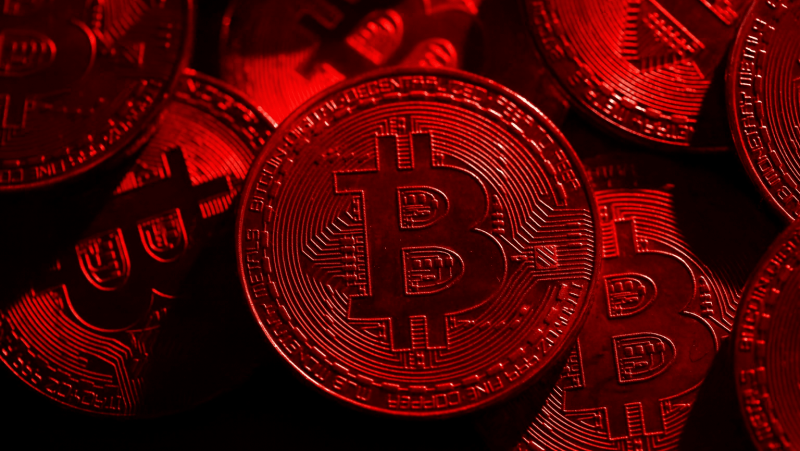
Blockchain comprises a digital network of blocks with a comprehensive ledger of transactions made in a cryptocurrency such as Bitcoin or other altcoins.One of the signature features of blockchain is that it is maintained across more than one computer. The ledger can be public or private (permissioned.) In this sense, blockchain is immune to the manipulation of data making it not only open but verifiable. Because a blockchain is stored across a network of computers, it is very difficult to tamper with. The Evolution of BlockchainBlockchain was originally invented by an individual or group of people under the name of Satoshi Nakamoto in 2008. The purpose of blockchain was originally to serve as the public transaction ledger of Bitcoin, the world’s first cryptocurrency.In particular, bundles of transaction data, called “blocks”, are added to the ledger in a chronological fashion, forming a “chain.” These blocks include things like date, time, dollar amount, and (in some cases) the public addresses of the sender and the receiver.The computers responsible for upholding a blockchain network are called “nodes.” These nodes carry out the duties necessary to confirm the transactions and add them to the ledger. In exchange for their work, the nodes receive rewards in the form of crypto tokens.By storing data via a peer-to-peer network (P2P), blockchain controls for a wide range of risks that are traditionally inherent with data being held centrally.Of note, P2P blockchain networks lack centralized points of vulnerability. Consequently, hackers cannot exploit these networks via normalized means nor does the network possess a central failure point.In order to hack or alter a blockchain’s ledger, more than half of the nodes must be compromised. Looking ahead, blockchain technology is an area of extensive research across multiple industries, including financial services and payments, among others.
Blockchain comprises a digital network of blocks with a comprehensive ledger of transactions made in a cryptocurrency such as Bitcoin or other altcoins.One of the signature features of blockchain is that it is maintained across more than one computer. The ledger can be public or private (permissioned.) In this sense, blockchain is immune to the manipulation of data making it not only open but verifiable. Because a blockchain is stored across a network of computers, it is very difficult to tamper with. The Evolution of BlockchainBlockchain was originally invented by an individual or group of people under the name of Satoshi Nakamoto in 2008. The purpose of blockchain was originally to serve as the public transaction ledger of Bitcoin, the world’s first cryptocurrency.In particular, bundles of transaction data, called “blocks”, are added to the ledger in a chronological fashion, forming a “chain.” These blocks include things like date, time, dollar amount, and (in some cases) the public addresses of the sender and the receiver.The computers responsible for upholding a blockchain network are called “nodes.” These nodes carry out the duties necessary to confirm the transactions and add them to the ledger. In exchange for their work, the nodes receive rewards in the form of crypto tokens.By storing data via a peer-to-peer network (P2P), blockchain controls for a wide range of risks that are traditionally inherent with data being held centrally.Of note, P2P blockchain networks lack centralized points of vulnerability. Consequently, hackers cannot exploit these networks via normalized means nor does the network possess a central failure point.In order to hack or alter a blockchain’s ledger, more than half of the nodes must be compromised. Looking ahead, blockchain technology is an area of extensive research across multiple industries, including financial services and payments, among others. Read this Term ledgers keeping track of who owns what.
NFTs come into their own in this context since they are centered around ownership of unique (non-fungible) items. As such, it’s likely that a shift in thinking around NFTs will start to occur as web3 develops.
Currently, NFTs are associated with JPEG images and are closely tied in with crypto as money. They are traded and flipped on blockchain-connected marketplaces as though they were exotic altcoins, except for the ones that are considered art, which might occasionally get traded at Sotheby’s as well as on OpenSea.
While some of these exotic altcoins
Altcoins
Altcoin is a term that describes any cryptocurrency that isn’t Bitcoin. Since Bitcoin’s inception there have been countless cryptos launched. Many of these have met varying levels of success, though several have risen to rival Bitcoin itself.Ether, XRP, Stellar, Monero, Ada, and Dash are a few examples of the more popular altcoins. There presently exist over 5,000 altcoins and this number seemingly grows constantly. The paramount altcoins as of May 2020 are Ethereum and Ripple.In terms of structure, altcoins can be different from the Bitcoin network in any number of ways. This is often the primary reason for the existence of altcoins themselves.Why Do So Many Altcoins Exist?While Bitcoin is both innovative and massively influential, it does possess some problems that developers are trying to fix with their own products. Over time there have been developed altcoins that makes faster transactions, while also altcoins that are less volatile, or altcoins that are more private, etc.Altcoins also can have different economic models and their methods of distribution can be different. Moreover, their programming languages can be different, and they can support the development of different kinds of applications. While many altcoins have been built with amazing technology and have amazing potential to change the world, many of them have been created as methods of grabbing quick cash, or even as jokes.However, some of the joke altcoins have still managed to gather a significant number of users and followers. The most prominent example of this trend is DogeCoin, a cryptocurrency inspired by the Doge meme. Additionally, other joke altcoins have also experienced large market cap, such as JesusCoin.
Altcoin is a term that describes any cryptocurrency that isn’t Bitcoin. Since Bitcoin’s inception there have been countless cryptos launched. Many of these have met varying levels of success, though several have risen to rival Bitcoin itself.Ether, XRP, Stellar, Monero, Ada, and Dash are a few examples of the more popular altcoins. There presently exist over 5,000 altcoins and this number seemingly grows constantly. The paramount altcoins as of May 2020 are Ethereum and Ripple.In terms of structure, altcoins can be different from the Bitcoin network in any number of ways. This is often the primary reason for the existence of altcoins themselves.Why Do So Many Altcoins Exist?While Bitcoin is both innovative and massively influential, it does possess some problems that developers are trying to fix with their own products. Over time there have been developed altcoins that makes faster transactions, while also altcoins that are less volatile, or altcoins that are more private, etc.Altcoins also can have different economic models and their methods of distribution can be different. Moreover, their programming languages can be different, and they can support the development of different kinds of applications. While many altcoins have been built with amazing technology and have amazing potential to change the world, many of them have been created as methods of grabbing quick cash, or even as jokes.However, some of the joke altcoins have still managed to gather a significant number of users and followers. The most prominent example of this trend is DogeCoin, a cryptocurrency inspired by the Doge meme. Additionally, other joke altcoins have also experienced large market cap, such as JesusCoin. Read this Term and works of art will certainly remain and retain value, we may see a greater emphasis on NFTs with utility. Most likely, NFTs will not be the upfront focus of future web3 projects. Instead, the priority will be to construct applications and platforms that garner use, and NFTs will be a component within that process.
This shift in emphasis may even spill over into crypto as a whole. The last crypto cycle was relentlessly centered around financial speculation. The market expanded spectacularly, and then it collapsed in on itself, taking out the fraud in the process.
Does this breathtaking rise and fall mean that the stage has been cleared for a coming cycle with a different character? One that is centered less explicitly on finance, and leaning more towards commerce and utility? It’s a tenable possibility, at least.
What is a Web3 Strategy?
Web3 is focused on participation and ownership, which is tangibly different from the traditional relationship between the customer/client/user on the one hand and the provider on the other.
This is already evident in some good-quality NFT projects, which emphasize community, and in which items within an NFT collection can act as artwork and collectibles, and, at the same time, as membership passes.
While it’s true that some of these projects lack clarity of purpose, the sense of buying in and working together towards something is often palpable. Many collections now invite holders to lock their NFTs into pseudo-staking mechanisms, whereby they might earn native tokens (which are intended to have utility within the project ecosystem) or receive other rewards.
Such projects can tend to come across as a little up-in-the-air and experimental, with features deployed before any endpoint has been defined, but they undoubtedly provide fascinating new digital models for traditional brands to contemplate.
And, if web2 platforms and traditional companies pick up on these new models, then they already have a core service or product, that defines something lacking from some NFT projects, around which web3 concepts can be structured.
A web3 strategy, then, is one that incorporates crypto wallets and, most likely, NFTs. In this way, brands can integrate their products and services into an emerging version of the web-based on decentralized ownership and transactions.
Which Brands Are Leading the Way?
Starbucks is currently prominent with its web3-oriented Starbucks Odyssey rewards program. The company is working closely with the previously-mentioned Adam Brotman and Forum3, and Brotman himself used to be the Chief Digital Officer at Starbucks, helping create the coffee chain’s original rewards program.
Nike is focused on web3 through its .SWOOSH project, which is building a platform on which to create and trade virtual apparel, and which places, in true NFT style, a heavy emphasis on community.
Nike also owns RTFKT, a web3 studio founded at the beginning of 2020, focused on virtual sneakers, art and avatars, and responsible for the highly prized CloneX NFT collection.
From the world of social media, Reddit stands out, as its digital items, called Collectible Avatars, took NFT markets by surprise in the second half of 2022. Interest in Reddit’s NFTs surged, and there are now over five million Collectible Avatar holders.
Whether or not every brand will eventually have a web3 strategy remains to be seen. However, if web3 mechanisms become standard, then we may look back on early discussions about crypto’s connection to web development as quaint moments in internet history.
“Asking in 2022, will every consumer brand have a web3 strategy one day? is like asking, will every brand have a website one day? in 1994.”
That’s a statement by Adam Brotman, the Co-Founder of the web3 startup, Forum3, and it’s the kind of suggestion that sounds exciting, but is it realistic?
Right now, such a statement makes sense to anyone with a close interest in crypto, but it may otherwise still sound a little esoteric. This, perhaps, has parallels with how a question about websites would have gone down in 1994: meaningful to software developers, perhaps, but not to the wider business world or the general public.
Web3 refers, not surprisingly, to a third iteration of the web. In a nutshell, web1, the early web, was all about reading static content, while web2 enabled users to read, interact with, and create content. Web2 is the current age of social media, self-publishing and alternative media.
Following on from this, web3 is like web2 but with ownership. The web3 vision revolves around decentralization and allows users total control over their own content, digital assets and online transactions. And according to some observers, we are now in the early stages of a transitional phase into web3.
How Important Is Crypto to Web3?
Web3 lets you own digital assets and carry them between decentralized applications, and it’s difficult to conceive of a way to enable authentic, autonomous ownership of digital assets without crypto and NFTs, or, to put it another way, without blockchain
Blockchain
Blockchain comprises a digital network of blocks with a comprehensive ledger of transactions made in a cryptocurrency such as Bitcoin or other altcoins.One of the signature features of blockchain is that it is maintained across more than one computer. The ledger can be public or private (permissioned.) In this sense, blockchain is immune to the manipulation of data making it not only open but verifiable. Because a blockchain is stored across a network of computers, it is very difficult to tamper with. The Evolution of BlockchainBlockchain was originally invented by an individual or group of people under the name of Satoshi Nakamoto in 2008. The purpose of blockchain was originally to serve as the public transaction ledger of Bitcoin, the world’s first cryptocurrency.In particular, bundles of transaction data, called “blocks”, are added to the ledger in a chronological fashion, forming a “chain.” These blocks include things like date, time, dollar amount, and (in some cases) the public addresses of the sender and the receiver.The computers responsible for upholding a blockchain network are called “nodes.” These nodes carry out the duties necessary to confirm the transactions and add them to the ledger. In exchange for their work, the nodes receive rewards in the form of crypto tokens.By storing data via a peer-to-peer network (P2P), blockchain controls for a wide range of risks that are traditionally inherent with data being held centrally.Of note, P2P blockchain networks lack centralized points of vulnerability. Consequently, hackers cannot exploit these networks via normalized means nor does the network possess a central failure point.In order to hack or alter a blockchain’s ledger, more than half of the nodes must be compromised. Looking ahead, blockchain technology is an area of extensive research across multiple industries, including financial services and payments, among others.
Blockchain comprises a digital network of blocks with a comprehensive ledger of transactions made in a cryptocurrency such as Bitcoin or other altcoins.One of the signature features of blockchain is that it is maintained across more than one computer. The ledger can be public or private (permissioned.) In this sense, blockchain is immune to the manipulation of data making it not only open but verifiable. Because a blockchain is stored across a network of computers, it is very difficult to tamper with. The Evolution of BlockchainBlockchain was originally invented by an individual or group of people under the name of Satoshi Nakamoto in 2008. The purpose of blockchain was originally to serve as the public transaction ledger of Bitcoin, the world’s first cryptocurrency.In particular, bundles of transaction data, called “blocks”, are added to the ledger in a chronological fashion, forming a “chain.” These blocks include things like date, time, dollar amount, and (in some cases) the public addresses of the sender and the receiver.The computers responsible for upholding a blockchain network are called “nodes.” These nodes carry out the duties necessary to confirm the transactions and add them to the ledger. In exchange for their work, the nodes receive rewards in the form of crypto tokens.By storing data via a peer-to-peer network (P2P), blockchain controls for a wide range of risks that are traditionally inherent with data being held centrally.Of note, P2P blockchain networks lack centralized points of vulnerability. Consequently, hackers cannot exploit these networks via normalized means nor does the network possess a central failure point.In order to hack or alter a blockchain’s ledger, more than half of the nodes must be compromised. Looking ahead, blockchain technology is an area of extensive research across multiple industries, including financial services and payments, among others. Read this Term ledgers keeping track of who owns what.
NFTs come into their own in this context since they are centered around ownership of unique (non-fungible) items. As such, it’s likely that a shift in thinking around NFTs will start to occur as web3 develops.
Currently, NFTs are associated with JPEG images and are closely tied in with crypto as money. They are traded and flipped on blockchain-connected marketplaces as though they were exotic altcoins, except for the ones that are considered art, which might occasionally get traded at Sotheby’s as well as on OpenSea.
While some of these exotic altcoins
Altcoins
Altcoin is a term that describes any cryptocurrency that isn’t Bitcoin. Since Bitcoin’s inception there have been countless cryptos launched. Many of these have met varying levels of success, though several have risen to rival Bitcoin itself.Ether, XRP, Stellar, Monero, Ada, and Dash are a few examples of the more popular altcoins. There presently exist over 5,000 altcoins and this number seemingly grows constantly. The paramount altcoins as of May 2020 are Ethereum and Ripple.In terms of structure, altcoins can be different from the Bitcoin network in any number of ways. This is often the primary reason for the existence of altcoins themselves.Why Do So Many Altcoins Exist?While Bitcoin is both innovative and massively influential, it does possess some problems that developers are trying to fix with their own products. Over time there have been developed altcoins that makes faster transactions, while also altcoins that are less volatile, or altcoins that are more private, etc.Altcoins also can have different economic models and their methods of distribution can be different. Moreover, their programming languages can be different, and they can support the development of different kinds of applications. While many altcoins have been built with amazing technology and have amazing potential to change the world, many of them have been created as methods of grabbing quick cash, or even as jokes.However, some of the joke altcoins have still managed to gather a significant number of users and followers. The most prominent example of this trend is DogeCoin, a cryptocurrency inspired by the Doge meme. Additionally, other joke altcoins have also experienced large market cap, such as JesusCoin.
Altcoin is a term that describes any cryptocurrency that isn’t Bitcoin. Since Bitcoin’s inception there have been countless cryptos launched. Many of these have met varying levels of success, though several have risen to rival Bitcoin itself.Ether, XRP, Stellar, Monero, Ada, and Dash are a few examples of the more popular altcoins. There presently exist over 5,000 altcoins and this number seemingly grows constantly. The paramount altcoins as of May 2020 are Ethereum and Ripple.In terms of structure, altcoins can be different from the Bitcoin network in any number of ways. This is often the primary reason for the existence of altcoins themselves.Why Do So Many Altcoins Exist?While Bitcoin is both innovative and massively influential, it does possess some problems that developers are trying to fix with their own products. Over time there have been developed altcoins that makes faster transactions, while also altcoins that are less volatile, or altcoins that are more private, etc.Altcoins also can have different economic models and their methods of distribution can be different. Moreover, their programming languages can be different, and they can support the development of different kinds of applications. While many altcoins have been built with amazing technology and have amazing potential to change the world, many of them have been created as methods of grabbing quick cash, or even as jokes.However, some of the joke altcoins have still managed to gather a significant number of users and followers. The most prominent example of this trend is DogeCoin, a cryptocurrency inspired by the Doge meme. Additionally, other joke altcoins have also experienced large market cap, such as JesusCoin. Read this Term and works of art will certainly remain and retain value, we may see a greater emphasis on NFTs with utility. Most likely, NFTs will not be the upfront focus of future web3 projects. Instead, the priority will be to construct applications and platforms that garner use, and NFTs will be a component within that process.
This shift in emphasis may even spill over into crypto as a whole. The last crypto cycle was relentlessly centered around financial speculation. The market expanded spectacularly, and then it collapsed in on itself, taking out the fraud in the process.
Does this breathtaking rise and fall mean that the stage has been cleared for a coming cycle with a different character? One that is centered less explicitly on finance, and leaning more towards commerce and utility? It’s a tenable possibility, at least.
What is a Web3 Strategy?
Web3 is focused on participation and ownership, which is tangibly different from the traditional relationship between the customer/client/user on the one hand and the provider on the other.
This is already evident in some good-quality NFT projects, which emphasize community, and in which items within an NFT collection can act as artwork and collectibles, and, at the same time, as membership passes.
While it’s true that some of these projects lack clarity of purpose, the sense of buying in and working together towards something is often palpable. Many collections now invite holders to lock their NFTs into pseudo-staking mechanisms, whereby they might earn native tokens (which are intended to have utility within the project ecosystem) or receive other rewards.
Such projects can tend to come across as a little up-in-the-air and experimental, with features deployed before any endpoint has been defined, but they undoubtedly provide fascinating new digital models for traditional brands to contemplate.
And, if web2 platforms and traditional companies pick up on these new models, then they already have a core service or product, that defines something lacking from some NFT projects, around which web3 concepts can be structured.
A web3 strategy, then, is one that incorporates crypto wallets and, most likely, NFTs. In this way, brands can integrate their products and services into an emerging version of the web-based on decentralized ownership and transactions.
Which Brands Are Leading the Way?
Starbucks is currently prominent with its web3-oriented Starbucks Odyssey rewards program. The company is working closely with the previously-mentioned Adam Brotman and Forum3, and Brotman himself used to be the Chief Digital Officer at Starbucks, helping create the coffee chain’s original rewards program.
Nike is focused on web3 through its .SWOOSH project, which is building a platform on which to create and trade virtual apparel, and which places, in true NFT style, a heavy emphasis on community.
Nike also owns RTFKT, a web3 studio founded at the beginning of 2020, focused on virtual sneakers, art and avatars, and responsible for the highly prized CloneX NFT collection.
From the world of social media, Reddit stands out, as its digital items, called Collectible Avatars, took NFT markets by surprise in the second half of 2022. Interest in Reddit’s NFTs surged, and there are now over five million Collectible Avatar holders.
Whether or not every brand will eventually have a web3 strategy remains to be seen. However, if web3 mechanisms become standard, then we may look back on early discussions about crypto’s connection to web development as quaint moments in internet history.
Bitcoin’s Most-Cited Bear Market Indicator Hasn’t Triggered Yet. The One Most People Watch Already Has. The Difference Matters.Two different signals,...