
The UN biodiversity conference, COP15, is due to wrap up on 19 December. This weekend, we are looking at some of the ways that humanity is reliant on a healthy and thriving global ecosystem.
One million species are now said to be at risk of extinction, and if species losses continue to mount, ecosystem functions vital to human health and life will continue to be disrupted.
Ecosystems provide goods and services that sustain all life on this planet, including human life. While we know a great deal about how many ecosystems function, they often involve such complexity and are on a scale so vast that humanity would find it impossible to substitute for them, no matter how much money was spent in the process.
The Living Laboratory
The majority of prescribed medicines in industrialized countries are derived from natural compounds produced by animals and plants. Billions of people in the developing world rely primarily on traditional plant-based medicine for primary health care.
Many cures from nature are familiar; painkillers such as morphine from opium poppies, the antimalarial quinine from the bark from the South American cinchona tree, and the antibiotic penicillin that is produced by microscopic fungi.
Microbes discovered in the soil of Rapa Nui (Easter Island) fight heart disease by lowering cholesterol. AZT, one of the first anti-HIV/AIDS drugs, came from a large shallow-water sponge that lives in the Caribbean, and happens to be the same sponge that yielded antivirals to treat herpes and serves as the source for the first marine-derived anti-cancer drug to be licensed in the US.
Unsplash/ Hans-Jurgen-Mager
A crucial reservoir for future cures
To date, only around 1.9 million species have been identified (and in many cases barely studied). It is believed that there are millions more that are completely unknown.
Everything alive is the result of a complex “living laboratory” that has been conducting its own clinical tests since life began – approximately 3.7 billion years ago. This natural pharmaceutical library harbours myriad undiscovered cures, if only we don’t destroy them before they’re recognized.
Take the polar bear, now classified as “threatened”. As its Arctic habitat melts due to climate change, the world’s largest terrestrial predator has become an icon of the dangers posed by rising global temperatures. It might also be an icon for health. Polar bears amass huge volumes of fat before hibernating. Despite being fat to a degree that would be life-threatening to humans, they are apparently immune to Type II diabetes. They remain immobile for months, yet their bones remain unchanged. While dormant they do not urinate, yet their kidneys are undamaged. If we understood and could reproduce how bears detoxify waste while hibernating, we might be able to treat – and perhaps even prevent – the toxicity from kidney failure in humans.
Currently 13 per cent of the global population is clinically obese, and the number of Type II diabetes sufferers is predicted to rise to 700 million by 2045. Over the course of their lifetimes, 1 in 3 women over the age of 50, and 1 in 5 men will experience osteoporosis-related bone fractures. In the US alone, kidney failure kills more than 82,000 people and costs the US economy $35 million a year. Polar bears have naturally developed ‘solutions’ to these problems – Type II diabetes from obesity, osteoporosis from being immobile, and toxicity from kidney failure – all of which cause misery to millions.
© Unsplash/Teddie Humaam
Coral reefs and morphine
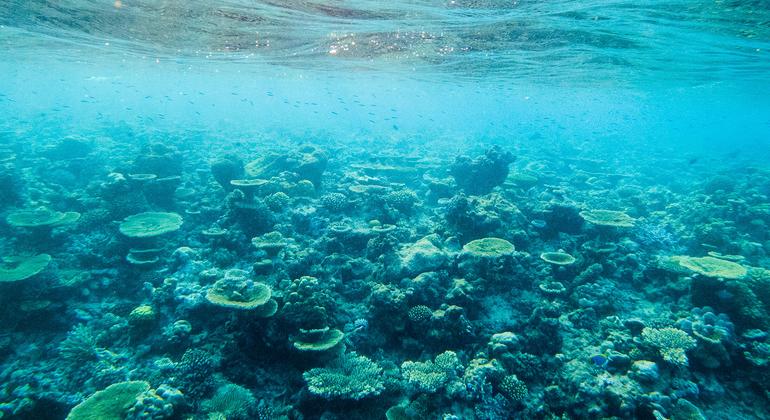
Another example is from coral reefs, sometimes referred to as “rainforests of the sea” due to their high biodiversity. Among the myriad inhabitants of these reefs are cone shells, a predatory mollusc that hunts with darts that deliver 200 distinct toxic compounds.
The drug Ziconotide exactly copies one cone shell’s toxic peptide, and is not just 1,000 times more potent than morphine, but also avoids the tolerance and dependency that opioids can cause. To date, of all the 700 cone snail species, only six have been scrutinized in detail, and of the potentially thousands of unique compounds they harbour, only 100 have been studied in detail. Coral reefs and all their occupants are being destroyed at alarming rates.
Providing chemical compounds is not the only way biodiversity is crucial to our health. A surprising array of species have helped revolutionize medical knowledge. Zebrafish have been central to our knowledge of how organs, especially the heart, form; a microscopic roundworm has led to an understanding of ‘programmed cell death’ (apoptosis) which not only regulates organ growth, but which, when disrupted, can cause cancer. Fruit flies and bacterial species were principal contributors to research that mapped the human genome.
There may be undiscovered species which, like scientific laboratory animals, possess attributes rendering them particularly well suited for studying and treating human disease. Should these species be lost, their secrets will be lost with them.
What’s driving biodiversity loss?
The main factor currently driving biodiversity loss is habitat destruction—on land; in streams, rivers, and lakes; and in the oceans.
Unless we significantly reduce our use of fossil fuels, climate change alone is anticipated to threaten with extinction approximately one quarter or more of all species on land by the year 2050, surpassing even habitat loss as the biggest threat to life on land.
Species in the oceans and in fresh water are also at great risk from climate change, especially those like corals that live in ecosystems uniquely sensitive to warming temperatures, but the full extent of that risk has not yet been calculated.

© UNICEF/Zar Mon
Healthy planet, healthy humans
Losses to biodiversity impinge on human health in numerous ways. Ecosystem disruption and the loss of biodiversity have major impacts on the emergence, transmission, and spread of many human infectious diseases. The pathogens for 60 per cent of human infectious diseases, for example malaria and COVID, are zoonotic, meaning they have entered our bodies after having lived in other animals.
The virus that causes HIV/AIDS, and which has killed over 40 million people to date, likely made the species jump from chimpanzees butchered for bushmeat in West Central Africa. All in all, there may be 10,000 zoonotic viruses capable of jumping species to us circulating silently in the wild today.
This makes the One Health approach – a collaborative, multisectoral, and transdisciplinary approach that brings together various intergovernmental agencies, governments and local and regional actors to tackle human health and environmental health together – critical to minimizing the risk of future disease spillover.
Selfishly, if the natural world is healthy, we will be too.
Planetary life insurance
A key challenge for organizations working to preserve biodiversity is to convince others – policymakers and the public in particular – that human beings and our health are fundamentally reliant on the animals, plants, and microbes we share this small planet with. We are totally dependent on the goods and services the natural world provides, and we have no other choice but to preserve it.
The World Economic Forum estimates that half of the world’s GDP ($44 trillion) depends on nature. Globally, the pharmaceutical industry’s annual revenue is $1.27 trillion, and each year healthcare in the US alone costs over $4 trillion.
In comparison, the amount of money needed to close the finance gap to conserve biodiversity is only $700 billion a year. For planetary health and life insurance, that figure is not just a bargain, it’s a necessity.
Humans cannot exist outside of nature. Protecting the plants, animals, and microbes we share our small planet with is not voluntary, for it is these organisms that create the support systems that make all life on Earth, including human life, possible.
The story is based on the UN Development Programme (UNDP) booklet, How Our Health Depends on Biodiversity.