China’s economy has grown from near irrelevance to the second largest in the world in less than half a century. Perhaps more incredible than its meteoric rise is the fact that it’s done so without any kind of significant economic contraction. Nearly fifty years of consistently positive GDP growth is practically sorcery in the eyes of the west, as our more democratized and less managed economies seldom manage to go a single decade without at least some kind of bust, let alone five.
The assumed impossibility of eternally uninterrupted economic growth has raised more and more eyebrows and elicited more and more dire predictions about China’s economy as time has passed. Surely the ruling Chinese Communist Party can’t stave off the fundamental economic forces indefinitely. Surely the other shoe is going to drop soon, and all will be right with the world.
It has to. Right?
We’re supposed to be living in a post-Soviet world. A world where the question of managed versus free economies is long-settled fact. But if the CCP is able to keep China’s economy—an economy encompassing the interests of over a billion people—from experiencing so much as a recession, that settled fact starts to look more like an open question with each passing quarter.
The current situation facing China’s real estate market is the latest and perhaps most convincing sign that China has finally reached a tipping point. A generation’s worth of breakneck growth, urbanization, and unintended consequences may be coming to a head.
(Un)Real Estate

China’s housing market is currently the biggest asset class in the world, with a notional value of nearly $60 trillion, more than the entire capitalization of the stock market. About one third of China’s economic activity involves the real estate sector (compared to 15 to 18% of the American economy), a staggering figure that becomes even more so when combined with the fact that housing accounts for about 70% of Chinese household wealth.
The reasons for the outsized role that housing and real estate play in China’s economy are complex and numerous, though they all trace their roots back to the CCP.
The current real estate crisis began shortly after China relaxed its rules on private home sales back in 1998. This change in policy roughly coincided with the explosive economic growth that’s characterized much of the past decades, much of which relied on the importation of cheap labor from the Chinese countryside into rapidly growing metro areas. Over 480 million Chinese moved from the country to the city in pursuit of better economic opportunities, and real estate developers were only too happy to provide the accommodations that the newly urbanized Chinese both needed and could suddenly afford.
Real estate developers and construction firms weren’t the only ones to profit from the unprecedented mass urbanization. Regional governments—many of which relied heavily on land sales for revenue—encouraged as much development as possible, and the seemingly endless demand for housing gave yield-starved Chinese investors a place to park their capital. Developers soon found themselves unable to keep up with the pace of demand and began to take on massive amounts of debt, much of it in dollar-denominated offshore bonds, and even started selling properties in developments that hadn’t even begun construction.
China’s government took notice of all this rampant speculation and took what it saw as reasonable steps to mitigate the threat of the collapse of the real estate market. It imposed new financing restrictions for developers based on their liabilities, debt, and cash holdings, as well as imposed new rules for banks to limit the amount of mortgage lending. Some developers, including the giant China Evergrande Group, were pushed into default by these new restrictions and were forced to put ongoing projects on hold while they sorted out their balance sheets.
Quirks in China’s real estate system meant that the newly paused or canceled projects were more than just the developers’ problems. Chinese homebuyers who had gotten mortgages and purchased unbuilt properties suddenly found themselves on the hook for properties that may never be completed, and many were understandably upset. More and more people began to protest the situation by refusing to pay their mortgages until upwards of $295 billion worth of loans were affected before the CCP started interfering with data collection on the subject. So far China’s government has been unsuccessful in trying to get the situation under control, though they are stepping up support for distressed developers and providing some special loans to help ensure certain projects are completed.
How Will China’s Housing Collapse Affect the World?

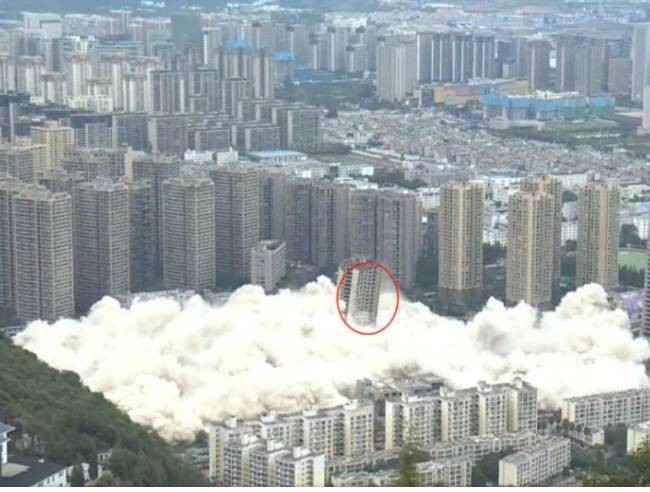
The current crisis has severe implications for the wider China economy, some of which are already being felt. S&P Global Ratings has claimed that around 20% of the Chinese developers it rates are at risk of going under, and that falling land sales have impacted local governmental revenues to the point that 30% of local governments may have to cut spending by the end of the year. Nonperforming real estate loans held by state-owned banks increased by a full 1% in 2021, a figure that is sure to grow as more recent data is made available. There is every reason to believe that the real estate market will suffer in the short to medium-term.
Harvard professor Kenneth Rogoff estimates that a drop of 20% in real estate-related investments could cut 5 to 10% out of China’s GDP, and that the subsequent drops in real estate and construction employment could create significant instability in China’s job market. Or, more broadly: “On the medium term, China faces a multitude of challenges, ranging from extremely adverse demographics to slowing productivity…Until now, the housing boom has been sustained by a broad economic boom that now faces steep headwinds.”
The intentionally opaque workings of China’s government make it difficult to predict exactly how the current crisis will play out. It is, however, possible to extrapolate the kind of impact the crisis may have on the global economy if China’s real estate market continues to deteriorate. The first and most obvious consequence of a serious slowdown in China’s economy will be felt by companies with significant exposure to China. Firms like Wynn Resorts, Apple, Tesla, and Disney would all suffer from the ensuing loss of revenue from China’s market, as would firms like Qorvo, Boeing, Caterpillar, and any other firms that rely on supplies from or sales to China.
In terms of Chinese companies, the ratings agency Fitch identified three main sectors that would be most vulnerable to a slowdown in the real estate market: Asset management companies, engineering and construction firms, and steel producers. Fitch also believes that small and regional banks would be most vulnerable to continuing difficulties—particularly if the trend of homebuyers refusing to make mortgage payments on properties that may not ever be built continues—though this may have little impact on the global economy beyond the consequences of a slowdown in China’s economy at large.
Conclusion
As dire as things may seem, however, it is important to remember that China’s government is acutely aware of the risks its economy faces from the current crisis. Pundits, analysts, and observers alike have been warning about an imminent collapse in China for years now, yet the closest we’ve seen was a self-imposed downturn that resulted from the government’s draconian attempts to eradicate COVID-19 within their borders. There is little reason to assume that China’s government’s control over their economy has slipped to any significant degree. Anathema as it may seem to western sensibilities, China’s government still possesses the tools, the will, and the monopoly on violence it needs to prevent the real estate market from destroying their economy as a whole.
The best response, for now, is to maintain the course. It may be a good idea to close positions concerning firms with significant exposure to China’s economy, but treat all other investments the same way you would when facing any other kind of economic headwinds. If the economies of Europe and the United States made it through the 2008 housing crisis, chances are China’s economy will weather this storm as well.