In a recent post, I pointed out that how we define words doesn’t matter when considering substantive issues. Thus whether addition is defined as a mental illness should have no bearing on how we treat addiction.
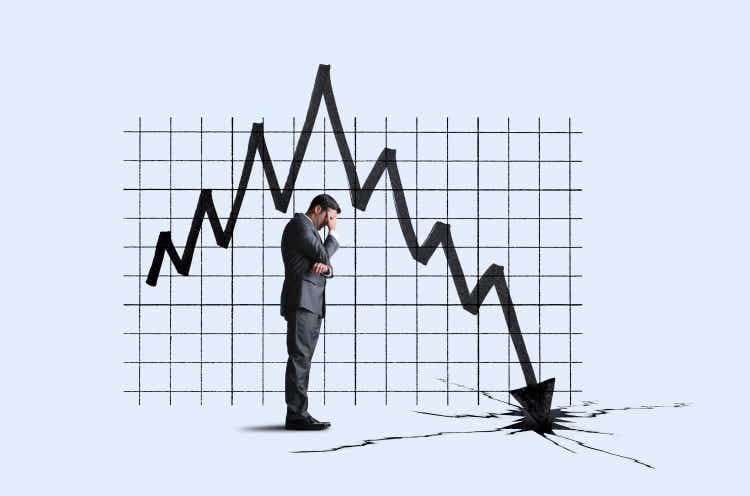
An old Noah Smith Bloomberg column reminds me of how definitions can lead us astray. Smith points out that (in 2018) Bitcoin prices had recently crashed, after previously soaring to a peak of $19,000. He acknowledges that Bitcoin prices might boom again in the future, but nonetheless defines this as a “bubble”:
But for ordinary investors, who don’t tend to get in early on potentially revolutionary new technologies or to have the savvy or luck to time the market, the Bitcoin bubble should serve as a learning experience. The most important lesson is: Financial bubbles are real, and they will make your life’s savings vanish if you aren’t careful.
Formally, an asset bubble is just a rapid rise and abrupt crash in prices.
I don’t have a big problem with Smith’s claim, but it seems odd to view this as a “lesson”. We didn’t need Bitcoin to know that asset prices often rise sharply and then fall.
This is not the definition of bubble that I prefer, but it’s pointless to argue about definitions. I’d rather debate substantive issues. So let’s consider this remark:
Bubbles are extremely hard to spot — if it was easy, they wouldn’t exist in the first place.
I’m confused. Why is it hard to spot a sharp rise and fall in price? I could imagine that it’s hard to predict a big rise and fall in price, but why would it be hard to spot a bubble?
A generous reading of Smith’s comment is that I’m interpreting “spot” too literally. He presumably means something like the following (from the same column):
Instead, it seems overwhelmingly likely that Bitcoin’s spectacular rise and fall was due not to rational optimism followed by sensible pessimism, but to some kind of aggregate market irrationality — a combination of herd behavior, cynical speculation and the entry into the market of a large number of new, poorly informed investors.
When Smith says bubbles are hard to spot, it seems like he is saying something like the following:
“It’s hard to spot situations where as asset is clearly overpriced relative to any sort of rational appraisal of fundamentals.” (My language, not his)
And that’s a perfectly fine definition of “bubble”; indeed it’s the definition that I would prefer. A bubble is a situation where an asset price is clearly overvalued, and likely at some point to fall back toward a more rational valuation. If that’s what Smith meant, then his comment:
Bubbles are extremely hard to spot — if it was easy, they wouldn’t exist in the first place.
would make perfect sense.
But if he’s defining bubbles as merely a sharp rise and then fall in price, then it makes no sense to say that bubbles are hard to spot. If the price has risen, but not yet fallen, then it is (by Smith’s first definition) not a bubble at all. To be a bubble you need sharp rise and fall in price.
Some readers might think I’m getting too cute—“Surely I know what Smith meant”. Yes, I think I know exactly what Smith meant. And that’s why I suspect his claim that a bubble is just a rise and fall in price is incomplete. He seems to have something more in mind. I believe that Smith (like me and most other people) implicitly defines a bubble as a situation where an asset is clearly overvalued relative to fundamentals. That’s why they are hard to spot—they haven’t crashed yet.
Why does any of this matter? Consider this sarcastic comment (the price of Bitcoin had fallen below $4000 at the time Smith wrote his column):
Now it suddenly makes a big difference how one defines “bubble”. Using Smith’s definition (a bubble is simply a big rise and fall in price), McAfee’s comment seems ridiculous. But if we use the more common definition that I prefer, and which McAfee probably prefers, and which Smith seems to implicitly have in mind in other portions of his column, then McAfee’s comment seem eminently defensible. I don’t know if Bitcoin was overvalued at $16,600 in 2018. But given its current price, McAfee’s 2018 claim certainly doesn’t look ridiculous. I interpret McAfee as saying Bitcoin prices are highly volatile, but we cannot predict where they will move over the long run. And that’s true! In contrast, an asset in the midst of a speculative bubble is a poor long-term investment, more likely to fall in the long run.
[To be clear, while I agree with McAfee that bubbles don’t exist, I find his explanation to be flawed. They are not “mathematically impossible in the new paradigm”; rather they don’t exist for Efficient Market Hypothesis reasons.]
Of course, if you define “bubble” as merely a sharp rise and fall in price, then bubbles do exist. But I doubt that McAfee would deny that assets rise and fall in price.
PS. When I do a post arguing that bubbles don’t exist, I sometimes get commenters telling me they disagree with me because a bubble is nothing more than a sharp rise and fall in price. But then exactly what are they disagreeing with?
PPS. Smith spends a good portion of his column discussing why he doesn’t believe the big swings in the price of Bitcoin are justified by changing fundamentals. I can’t comment, because I don’t really understand Bitcoin fundamentals. But his claim has no bearing on the point I’m trying to make in this post—that it’s important not to let definitions distort a debate over substantive issues.
PPPS. Commenters almost always ask me how I would test for the existence of bubble. I’d look for evidence that, in the long run, the class of mutual funds that invest using “bubble theory principles” outperform index funds. I define bubble theory principles as the buying of assets that the market currently prices at irrationally low levels and shorting assets that the market prices at irrationally high levels.
You say that’s hard to do? I agree!!