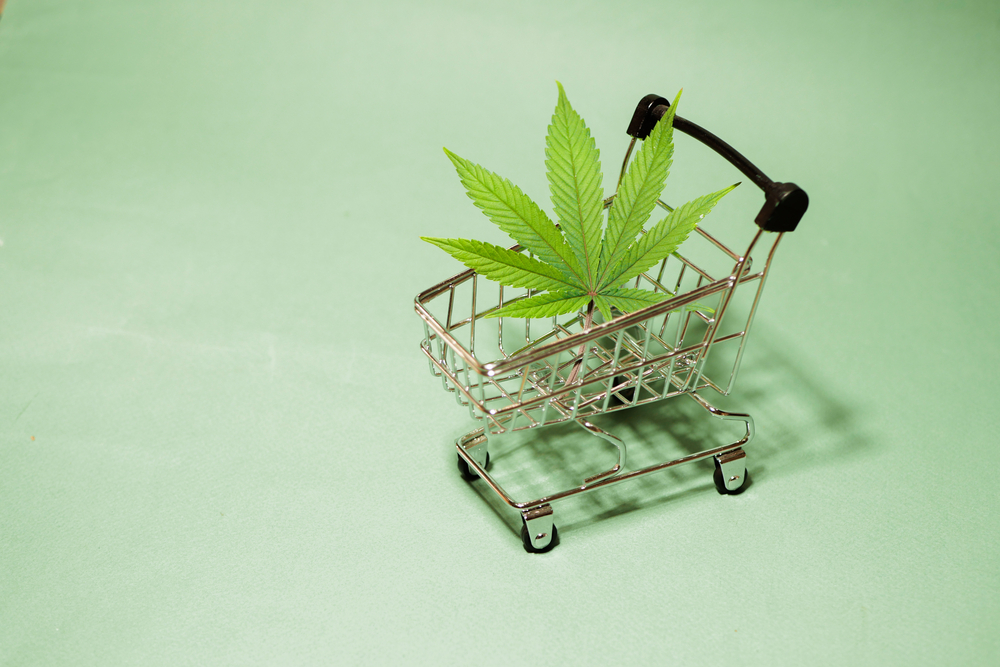
While the Government of India is still grappling with this new legislation — a bolt from the blue when New Delhi is engaging with the 27-nation bloc to craft a favourable free trade agreement (FTA) — Indian exporters will have to bear the brunt of it, especially those shipping commodities such as coffee, leather hide, skin and preparations, oil cake and wooden furniture.
This regulation plus three other new laws in the EU — all centred on climate change and subsidies — may turn out to be major bottlenecks for traders across the globe, with a discernible fallout on Indian exporters as well. The EU is India’s largest export market, commanding 16.5% of the nation’s exports. Last fiscal year, New Delhi exported items worth $74.8 billion, up from $64.9 billion a year ago, registering a 15% growth. In April-May this fiscal year, the EU’s share jumped to 17.4%, indicating the growing importance of the European bloc for India’s export trajectory.
How should New Delhi respond to these EU laws since Indian exporters will be seriously hit and rushing to the World Trade Organization (WTO) with a complaint is meaningless as the body’s dispute settlement mechanism is near-defunct? The government has two options, according to officials and experts ET spoke to. Either it can levy tit-for-tat tariffs for European goods or negotiate with the bloc to clinch waivers and buy more time.
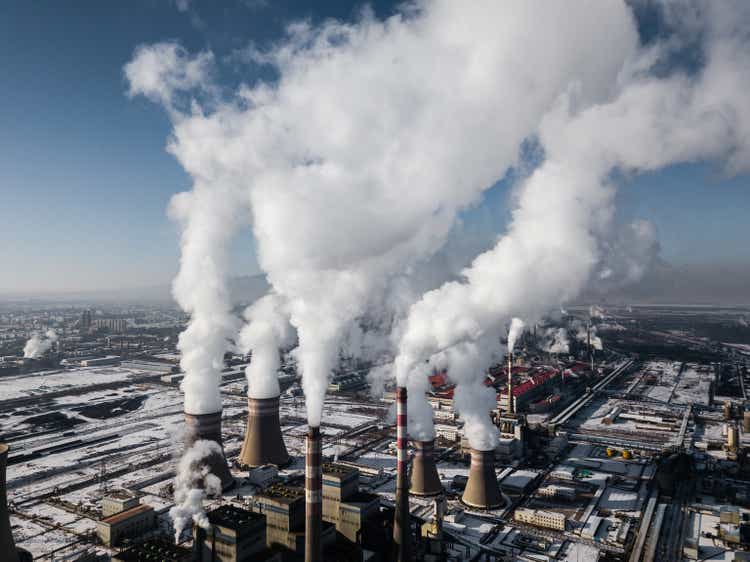
The other three forbidding EU laws are a) the Foreign Subsidy Regulation (FSR), under which businesses have to notify EU the subsidies they receive from government entities; b) the Regulation for Shipping Sector under which the sector will be taxed for using fossil fuels; and c) the Carbon Border Adjustment Mechanism (CBAM), which will tax carbon-intensive goods that enter EU and will hit India’s iron, steel and aluminium exports in particular.
Apart from these, a recent German law called the Supply Chain Due Diligence Act, which prohibits forced labour and protects human rights in global business supply chains, will demand more accountability from Indian suppliers.
‘EUROPE’S HYPOCRISY’
Abhijit Das, former head of WTO studies at the Indian Institute of Foreign Trade, says that at least two EU measures, the CBAM and the Deforestation Regulation, will have major fallout on Indian industries. Both these steps will increase compliance cost and thereby reduce price competitiveness of exports. Das calls these measures protectionist.
“EU wants to turn the clock back and use the environment as a pretext to shield its domestic industry and farmers from any import competition,” he says. “These measures have less to do with environmental protection and more to do with trade protection.” On the EU’s deforestation regulation in particular, Das says it’s nothing less than EU’s hypocrisy.
“It’s Europe’s hypocrisy to first chop off its primary forests during the last couple of centuries and then suddenly wake up to protect forests around the world,” he says.
Delhi-based think tank Global Trade Research Initiative (GTRI), in a recent paper, points out how the EU’s primary forest cover is less than 0.7% of its total forest area, compared with the global av- erage of 33%.
“ The Regulation appears to pri-oritise protecting its (EU’s) own agricultural sector and promoting exports, making imports more difficult,” the report says.
The impact on Indian businesses will be inevitable as EU’s share in India’s global exports in coffee (57%), leather hide, skin and preparations (29%) and oil cake (30%) is remarkably high. All these items are listed under the deforestation regulation.

The EU has been arguing that the new law is not merely a tool to fight climate change and biodiversity loss, but to deepen trade relations with countries that share Europe’s environmental values and ambitions. Other advanced economies such as the US, Japan and the UK may emulate some of EU’s initiatives on green matters.
On EU’s subsidy regulation, or FSR, which came into effect earlier this month and which g rants the European Commission the authority to probe cases where foreign subsidies distort competition, a GTRI report says, “FSR shows that EU’s hypocrisy knows no limits. While distributing an annual $50 billion subsidy to farmers and over $100 billion plus annual subsidies on clean energy transition, the EU empowers itself to investigate subsidies given by other countries. WTO explicitly prohibits countries from investigating subsidies given by other countries.
Thus, FSR is also in violation of WTO mandate.” The report further states that the European Commission, the EU’s executive arm, is already investigating India’s Production Linked Incentive, or PLI, scheme, which provides companies incentives on incremental sales from products manufactured in India.
ACTION, REACTION
RV Anuradha, a partner in Delhi’s Clarus Law Associates who specialises in international economic laws and environmental laws, says that for countries such as India, there will be “waterfall impact of the EU law (FSR) and, I would say, perhaps even its unintended consequences”.
The fallout, according to her, is the sheer “data requirements that businesses would need to comply with, particularly when the goods or services that avail of incentives like PLI within India are part of the EU supply chain, such as input suppliers or subcontractors for a EU tender”. The EU’s CBAM, she says, is unfair and violates the legal principles of the WTO, the United Nations Framework Convention on Climate Change and the Paris Agreement. “India’s response to CBAM needs to be both legal and diplomatic,” she says.
Jayant Dasgupta, former Indian ambassador to the WTO, says the most viable option for the country is to settle such contentious issues bilaterally as the appellate mechanism of the Geneva-headquartered multilateral body has been in disarray due to the US’s blocking. “India has an option to retaliate against the EU as it did to the US recently,” he adds.
In 2019, India adopted a similar strategy when it imposed additional duties on eight US products, including apples and chickpeas, to retaliate against America’s decision to raise tariffs on steel and aluminium products. For that tit-fortat measure, India’s ministry of commerce first estimated the loss caused by the US action and then imposed duties of an equivalent amount on goods coming from the US, according to a source in the ministry.
Das says that now India should devise a mechanism that takes care of the environment and at the same time hits back at the pan-European body. “One way could be the implementation of a CBAMequivalent measure calculated not on total carbon emission but on per capita emission,” he says. EU’s per capita greenhouse gas emissions — 7.2 tCO2e (tonne carbon dioxide equivalent) in 2022 — were way above the global average and three times more than that of India (2.4 tCO2e).
Under its CBAM policy, the EU will start collecting data from October 1, 2023, and impose tariffs based on carbon emissions from January 1, 2026. For India, the issue of data privacy — the CBAM allows inspectors to visit factories to get an update on new technologies — could become more grave if a not-so-friendly country like China implements a similar measure.
Some Indian companies have geared up to meet these new green challenges. In a response to ET’s queries, a spokesperson of the government-run Steel Authority of India Ltd (SAIL) concedes that CBAM will “definitely have an impact” on its exports to the EU, adding that the company has been continuously re-examining its operational processes to identify opportunities where carbon footprint can be reduced.
“The recently notified CBAM regulations are presently under examination at all levels, including government,” the official says. In addition to the direct impact on India’s exports, as SAIL fears, there could be a backflow effect of steel from other countries that will be barred from entering the EU, which in turn may find a way into other easier markets. “A backflow effect could result in distortion of other markets, including India,” the spokesperson says. Sources privy to internal discussions of the ministry of commerce on this matter say that the government may end up engaging with the EU to clinch concessions rather than take an out-and-out confrontationist stand. They, however, don’t rule out occasional retaliatory measures.
Ajay Sahai, director general and CEO of the Federation of Indian Export Organisations (FIEO), says that the best way forward for Indian exporters is to equip themselves with newer environmentfriendly technology as environment and labour laws will remain critical for global trade in the coming decade or so. According to him, other advanced economies will emulate the EU, a reason why confrontationist steps will boomerang.
“Since the EU has imposed similar conditions on its domestic industries too, it will always argue in the WTO that the measures are non-discriminatory against imports,” he says. So, what is the way out for India? Says Sahai, “We should negotiate bilaterally with the EU and try to buy more time for implementation. Meanwhile, we should sensitise our industries, particularly MSMEs and handhold them.” He adds that India should continue its negotiations with the EU and the UK to clinch favourable FTAs. “We will be in a worse condition if we don’t have any FTA and still face CBAM and other measures,” he adds.
As Anuradha of Clarus Law says, India is only collateral damage in certain cases. She says areas such as PLI are not intended targets of the FSR. “India should initiate a dialogue with the EU to resolve concerns and obtain waivers,” she says, adding that a CBAM waiver for India should be a diplomatic demand during the ongoing FTA negotiations.