
After a week — or, really, months — of tumult, the United Kingdom will have a new prime minister: Rishi Sunak.
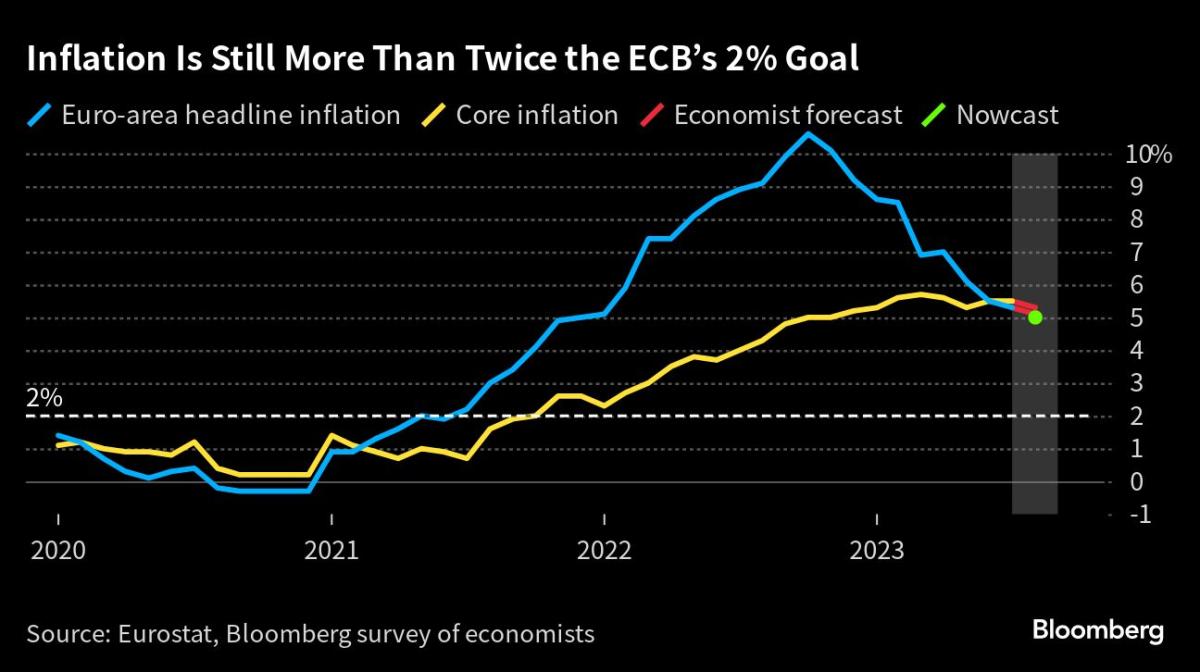
When Sunak, the son of immigrants of Indian descent, officially becomes prime minister, in the next 24 hours, he will be Britain’s first prime minister of color. It’s a historic victory, and Conservatives are celebrating what they hope will be his steadying tenure in an incredibly difficult moment for Sunak’s party and country. In addition to the UK’s most dramatic currency crisis in recent memory, the country is also facing a cost-of-living crisis and staggering inflation that the Bank of England has yet to significantly curb.
Sunak, who served as chancellor of the exchequer (basically, finance minister) under former Prime Minister Boris Johnson, won the contest among his fellow Conservative Party members of Parliament (or MPs) after Johnson and Penny Mordaunt, his closest rivals, withdrew from the race. That means regular party members won’t vote, and Sunak is now the Tories’ new leader — their third in seven weeks.
Sunak has vowed to “fix our economy, unite our Party and deliver for our country.” Given the steep economic headwinds the UK is facing and the Conservative Party’s sagging popularity, whether he can deliver on that remains unclear.
The incredibly wealthy 42-year-old former Goldman Sachs banker criticized the policy proposals that sparked the currency crisis. He has emphasized the need to bring down public debt and advocated for cutting taxes — but only if it’s affordable. His next policy moves aren’t clear, but in remarks both public and private, “stability” has been his key message.
How Sunak became the UK’s next prime minister — and how he might govern
In the last three months, UK politics have been incredibly chaotic. First, in July, Boris Johnson’s longtime ability to defy the political odds finally failed him. After a number of slow-burning scandals, Johnson’s fellow Conservative MPs lost faith in his leadership. Sunak, then Johnson’s finance minister, actually helped kick off the Cabinet rebellion that prompted Johnson’s resignation.
Sunak’s play, however, didn’t immediately pay off for him individually.
The race to replace Johnson culminated with a head-to-head campaign between Sunak and Foreign Secretary Liz Truss for the votes of regular Conservative Party members. While Sunak was preferred by his fellow members of Parliament during the earlier rounds of voting, Truss won the wider vote.
She governed for just over six weeks — during which time her administration introduced and then abandoned a tax plan that rocked British financial markets so thoroughly that ultimately she announced she would resign. That plan, dubbed Trussonomics, called for the biggest tax cuts in 50 years, aimed primarily at Britain’s wealthiest and corporations; a cost increase for national insurance; and other changes.
Now, after a weekend of jockeying within the party, Sunak is ascendant.
As Vox’s Jen Kirby previously noted, the former banker represents what the Tories may see as their future. The Conservative Party “has made an effort to diversify its representation in Parliament, and Sunak’s ascent is a testament to that.”
Sunak on Monday preached unity when addressing Tory MPs in a private session, reportedly greeting Johnson supporters warmly and saying he would focus on policies, not personalities.
It’s not entirely clear what those policies will be, however. Over the summer while running against Truss, Sunak criticized her economic proposals, calling them “fairytale economics” in a debate and warning that they’d cause exactly the kind of chaos that unfolded. He also released a 10-point plan at the time that included calls to cut illegal immigration, deliver on Brexit, and scrap a tax on domestic energy bills.
But in this incredibly truncated leadership contest, he hasn’t said much else. He gave no interviews or public speeches before clinching the win, and his first comments afterward were incredibly brief.
“There is no doubt we face a profound economic challenge,” he said Monday outside party headquarters. “We now need stability and unity. And I will make it my utmost priority to bring our party and our country together.”
His private remarks offer a bit more clarity. One Conservative MP told the Guardian that Sunak promised they’d get “back to serious, pragmatic traditions of Conservative government.” That could include spending cuts, though he didn’t say definitively; he believes the party is ideologically “low taxation,” that MP told the Guardian, but only if it’s affordable.
The current political crisis is years in the making
Although all the recent departures have been shocking, the political and economic crises in the UK have been brewing since the 2008 financial crisis.
Liam Stanley, a politics lecturer at the University of Sheffield and the author of the book Britain Alone: How a decade of conflict remade the nation, told Vox in an interview last week that some of the seeds for today’s crises were planted with David Cameron, the former prime minister who headed the Conservative Party from 2005 to 2016. “He took over at a time when … you could basically campaign on the idea that there would be constant economic growth, albeit at a moderately low level,” he explained. “That meant that politics, in a way, was quite easy. It was just a case of making relatively small decisions about how you share those proceeds from growth.”
Cameron was a centrist, and his opposition government agreed to back the ruling Labour Party’s social spending on the National Health Service and education. Then the financial crash of 2008 happened. Cameron and the Tories painted Labour “as to blame for the financial crisis, the recession, and everything that came with it,” Stanley said. When Cameron assumed the premiership in 2010, the Tories instituted massive fiscal austerity, degrading institutions like the NHS and failing to deal with underlying issues like stagnant wages and an affordable housing crisis.
Those problems have persisted in the intervening years, during which the Conservative Party has held power. Now the UK is in a cost-of-living crisis, tied partly to those long-term factors and exacerbated by current global inflation, the war in Ukraine, and the West’s ensuing sanctions against Russia.
British politics also effectively become a two-party system under Cameron; the Liberal Democrats, once a potent, moderate opposition force to both the Tories and Labour, formed a coalition with the Conservative Party. Then, during the Brexit vote and subsequently Johnson’s campaign, the Tories picked up constituents who had previously voted Labour, giving them a 71-seat working majority that has arguably contributed to their downfall.
Part of the Conservatives’ problems stem from an identity crisis; without Brexit to unify wildly divergent types of voters, the Tories have major issues with factionalization. But as long as Conservatives held on to their majority and believed Labour to be unelectable, Tony Travers, the director of LSE London, told Vox last week, they could behave in an “undisciplined” manner — like Johnson flouting his own government’s Covid-19 laws and Truss rolling out an illogical and nakedly political economic agenda.
Sunak appeared to recognize the extent of the discontent, reportedly telling his fellow Tory MPs in a closed-door meeting that the party was facing an “existential threat.”
New. Rishi Sunak apparently told MPs that this was “existential” for the Conservative party- effectively that they either deliver now or they could be dead.
— Anushka Asthana (@AnushkaAsthana) October 24, 2022
What happens next?
The first order of business is, ostensibly, to stabilize the UK’s economy, which Trussonomics threw into deep disarray.
“Stability would go a long way toward helping things right now, but even that stability is only going to help certain people,” Stanley said. That’s because the most trenchant and intractable issue will still be the cost-of-living crisis.
And amid rampant inflation, Chancellor of the Exchequer Jeremy Hunt is already asking government agencies other than the health and defense ministries to reduce their budgets by as much as 15 percent, Bloomberg reported last week, as well as putting an April deadline on Truss’s planned energy support payments.
The financial crunch for most Britons will only get tighter, as the value of the pound remains low while inflation is still quite high. The Bank of England has also raised interest rates seven times in recent months to combat inflation, which has led to soaring mortgage rates, causing fears of a coming housing market crash.
“Whichever government comes in, they’re going to be faced with a difficult situation; they’ve already been shown on the one hand that markets aren’t to be messed with and so you can’t just offer unlimited support to the economy,” Nikhil Sanghani, managing director of research at the Official Monetary and Financial Institutions Forum, told Vox last week. “The flip side is if you stick to more prudent fiscal policies and fiscal austerity, that’s going to be difficult to implement politically when you’re already facing a weak economy, high inflation, and people wanting support to pay their bills or mortgages, and the government unable to step in and provide that because their finances aren’t really in order right now.”
All that has led to opposition parties from all sides of the aisle redoubling their calls for an early general election, as they see the Conservative Party as one without enough popular support to maintain their hold on the government. The Conservative Party, however, is projecting an air of almost celebratory unity.
Enormous goodwill for Rishi Sunak coming out of the room. Charles Walker says: “If last Wed was a low point in politics, this was a high point.” MPs said he made a point of thanking and being gracious to all his predecessors (a marked contrast to Truss)
— Jessica Elgot (@jessicaelgot) October 24, 2022