
This feature is part of a series of interviews with the contributing authors of Foundations of International Relations.
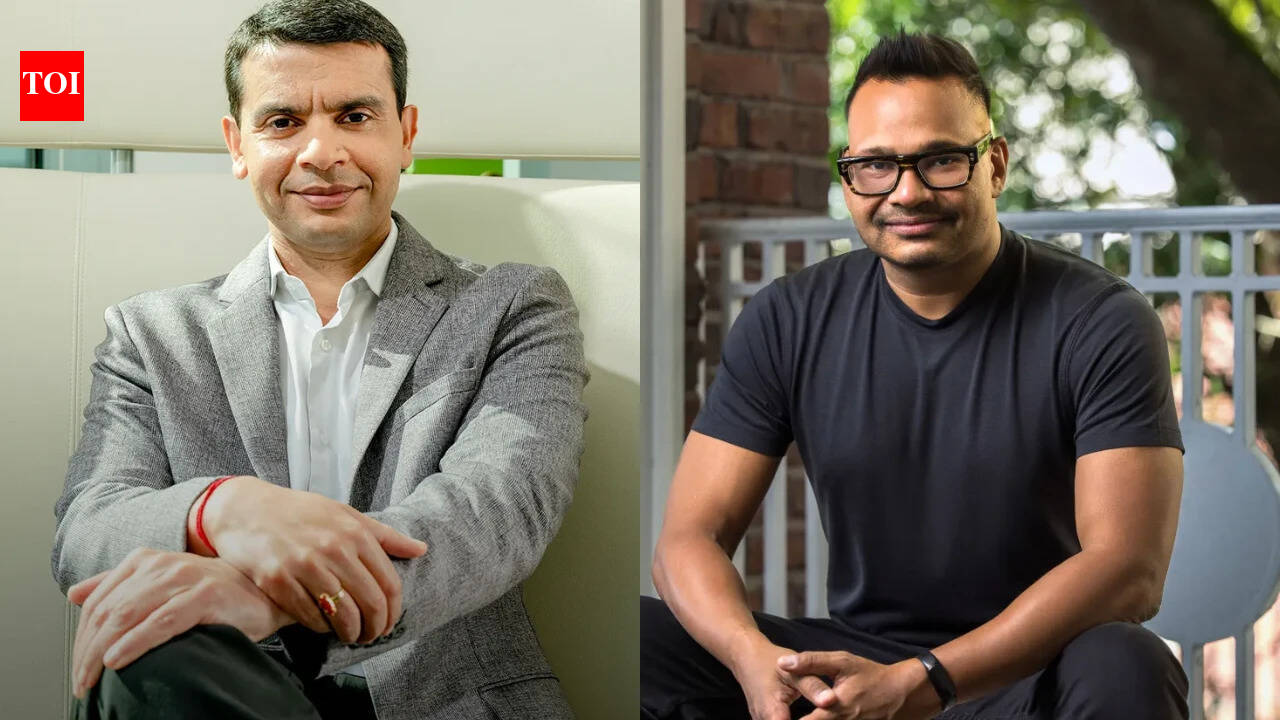
Clare Stevens is a Teaching Fellow in International Security with the Portsmouth Military Education team at the University of Portsmouth. Andreas Haggman is Head of Cyber Advocacy at the United Kingdom’s Department for Digital, Culture, Media and Sport. He holds a PhD in Cyber Security from Royal Holloway, University of London. They are the co-authors of “Connectivity and Exploitation in the Digital Age” in McGlinchey, Stephen (2022). Foundations of International Relations. London: Bloomsbury.
Your chapter in Foundations of International Relations deals with the broader effects of the internet on global politics and society. How did you first get involved in thinking about this particular issue?
CS – I first started thinking about the risks and benefits of global digital connectivity when I started investigating the revelations associated with the Stuxnet incident. This was a complex bit of coding that was designed to interfere with the uranium enrichment processes of the Iranian nuclear programme, and details of Stuxnet started emerging in 2011 onwards, though I started researching it in 2014 and eventually published something on it in 2019. It’s likely that the computer worm was designed by state actors to sabotage Iran’s enrichment infrastructures. Despite the benefits that many people undoubtedly enjoy thanks to digital connectivity, the complexity and ubiquity of that digital connectivity also mean that there are all kinds of ways in which those systems are also vulnerable to exploitation or accidental breakdown. This tension – between connectivity and vulnerability – is something that I find compelling, especially when thinking more broadly about the relations between technologies and society. I think that technology does not simply impact society as though it is some external force, but instead that technologies and societies co-produce each other: for me, cyber operations by state actors are one fascinating means of investigating these broader cultural and social relations.
AH – I have had a broad interest in digital technology for a long time, but really became more involved in the security implications during my university studies. Having consumed a lot of relevant academic material during my undergraduate and master’s degrees, my PhD studies really offered the first opportunities to make substantive contributions to the debate. With my largely non-technical background, I found myself bridging the gap between the traditionally tech-dominated field of cyber security, and the disciplines of geopolitics and international relations. Being able to speak the language of both communities has proved immensely valuable and rewarding.
In terms of your journey from one-time student to academic/professional life, how did you find your way and can you give a brief summary of your career thus far?
CS – That was a strange and circuitous route! I wanted to apply to work for the civil service in the UK, but ended up doing a MSc in International Security as a way into that instead. After that though, I went back to work as a Quality Administrator in a packaging factory, thinking that was the end of my academic career, but then one of my old supervisors sent me an email mentioning that there were funded PhD positions available if I could put a convincing application together. The PhD was incredibly hard and took more than the three years that it should have, but I’m glad I did it – I love the intellectual challenge and the feeling of exploring new ideas. After working a series of short-term teaching contracts, I applied for a Teaching Fellowship job and am now teaching international security and theories of airpower to some of the next generation of Royal Air Force officer cadets, which is pretty cool!
AH – I am currently Head of Cyber Advocacy at the Department for Digital, Culture, Media and Sport – a UK central government department with a large range of cyber security policy responsibilities. Policy work is something that started appealing to me during my PhD, and I am fortunate to have found a role where my subject matter expertise adds value. Before joining the government, I have had a varied career intertwined with time in academia, including stints in the video games industry, retail management, the defence sector, and in insurance.
How has the way you understand the world changed over time, and what (or who) prompted the most significant shifts in your thinking?
CS – I think the most significant shifts in my thinking have occurred thanks to my engagement with critical security studies and the intellectual history and theories this field draws from. I remember I found poststructuralist theories really compelling to begin with! But then I realised that I couldn’t explain the ideas in plain English, which told me that I probably didn’t understand them properly, and so I’m not as post-structuralist as I was when I started out. Since then I’ve been really inspired by writers and the ideas of Science and Technology Studies, especially books by people like Paul Edwards (Inventing Accuracy), Sheila Jasanoff and Sang-Hyun Kim (Dreamscapes of Modernity), Edward Jones-Imhotep (The Unreliable Nation: Hostile Nature and Technological Failure in the Cold War) and John Law (After Method). I’m now working at utilising insights from both fields, especially ideas of boundary work (Thomas Gieryn) as an alternative analytical framework to securitisation theories.
AH – Over time I have grown to appreciate the value of interdisciplinarity and different lenses to view the world. I owe a lot to colleagues in my Centre for Doctoral Training cohort at Royal Holloway who taught me a lot about the technical aspects of cyber security. The interdisciplinary environment was also ideal for honing communication skills with people from different academic backgrounds.
Do you think it is more important for academics (and students by extension) to dedicate most of their time to understanding the world, or instead actively to working to change it?
CS – At the risk of sitting on the fence like a typical academic, I would say we need there to be scholars who do each of these things. As a critical scholar, rather than necessarily a problem-solving scholar, I would say that understanding is a crucial first step to changing the world. But I’m also keenly aware that critical security studies and ‘critical IR’ is facing some difficult questions about itself in recent years. We only have to look at a selection of headlines to see there is a lot wrong with how the global systems of the world are shaping this world, but despite the shortcomings of the academic field I work in, the optimist in me wants to believe that we can play a part in changing it as well as understanding it. If nothing else, my teaching roles over the past five years lead me to believe that there is a lot to be inspired about by the next generation of people and young scholars that are leaving universities now. So perhaps my teaching work, and that of other academics, is my best hope of playing a (very small) part in actively working to change the world for the better.
AH – Academia can sometimes be seen as a place for lofty ideals, but with little impact on the ‘real’ world. I think academics’ big strength lies in understanding the world, while others (government, companies, activists) are in a better position to take action. The critical challenge is for academics to communicate their work and ideas in accessible ways that enable those with agency to take effective action. One area where I will disagree with myself is in innovation. There is so much exciting science and technology research and development happening in universities, and that innovation can be directly harnessed for real-world applications.
Where do you see the most exciting research and debates happening in and around the discipline of International Relations?
CS – I am fascinated by the post-colonial and decolonial critiques of International Relations and security studies, and am reading as much as I can of the new scholarship that is emerging here. I am also really excited about the new scholarship that is emerging at the intersections of critical security studies and Science and Technology Studies. That said, a lot of this scholarship (including my own interests!) are concerned with ‘new’ technologies and digital technologies, so I think it would be exciting to explore ‘old’ technologies a bit more from this perspective, especially things like ‘conventional’ weapons and strategic warfare, as a way of putting current cyber operations and military cyber commands into a bit of historical perspective…I think this may be a niche interest of mine though!
AH – To be very specific, I find the debate around offensive cyber capabilities fascinating. It’s a relatively new field yet can draw on decades of theory and practice in other fields (arms races, deterrence, game theory). The debate gets really exciting when people recognise the nuance that the cyber element adds, and how it therefore diverges from established theories. For example, early proponents of cyber deterrence held that the principles of nuclear deterrence stay true in cyberspace. In recent years the debate has moved away from this notion, acknowledging that cyber capabilities differ greatly from nuclear capabilities, and we should not transpose our old understandings to the new world uncritically.
What is the most important advice you could give to students who are starting their journey with International Relations?
CS – Be curious. You probably already are if you are interested in International Relations. But be curious about your own assumptions and intellectual predispositions and taken-for-granteds, as much as you are curious about the world ‘out there.’ I would say the most rewarding thing I have experienced from working in this field is being challenged about my own biases and preconceptions. It can be unnerving and it can be a bit intellectually destabilising, to have your mental frameworks challenged by the ideas and critiques of others, but it’s also incredibly important for us to think through our biases if the field of International Relations is to remain useful and relevant.
AH – Don’t forget that the world is ultimately inhabited by people. Decisions on the international area are taken by leaders, and these decisions influence populations. International relations should not be studied completely divorced from the personalities involved and the lives impacted.
Those who read your chapter in Foundations of International Relations will take away many ideas and thoughts with them, but is there something specific you would like to leave in their minds?
CS – I think I want them to come away from the chapter recognising that not everyone experiences the benefits of connectivity equally, and that the things that state actors do in the name of security may actually be making our reliance on digital infrastructures more vulnerable to breakdowns, accidents and exploitations. If people who read our chapter are intrigued by the tensions between ideas of connectivity and ideas of vulnerability, and go on to read more, then I think we’ve done the job I had intended!
AH – You are part of the digital ecosystem and have agency. Events will happen around you, but you are also a participant. How you use communications and connectivity matters – a security mindset is a good start!