Hong Kong is one of China’s most prominent financial hubs, and now it might pivot in the direction of cryptocurrencies
Cryptocurrencies
By using cryptography, virtual currencies, known as cryptocurrencies, are nearly counterfeit-proof digital currencies that are built on blockchain technology. Comprised of decentralized networks, blockchain technology is not overseen by a central authority.Therefore, cryptocurrencies function in a decentralized nature which theoretically makes them immune to government interference. The term, cryptocurrency derives from the origin of the encryption techniques that are employed to secure the networks which are used to authenticate blockchain technology. Cryptocurrencies can be thought of as systems that accept online payments which are denoted as “tokens.” Tokens are represented as internal ledger entries in blockchain technology while the term crypto is used to depict cryptographic methods and encryption algorithms such as public-private key pairs, various hashing functions, and an elliptical curve. Every cryptocurrency transaction that occurs is logged in a web-based ledger with blockchain technology.These then must be approved by a disparate network of individual nodes (computers that maintain a copy of the ledger). For every new block generated, the block must first be authenticated and confirmed ‘approved’ by each node, which makes forging the transactional history of cryptocurrencies nearly impossible. The World’s First CryptoBitcoin became the first blockchain-based cryptocurrency and to this day is still the most demanded cryptocurrency and the most valued. Bitcoin still contributes the majority of the overall cryptocurrency market volume, though several other cryptos have grown in popularity in recent years.Indeed, out of the wake of Bitcoin, iterations of Bitcoin became prevalent which resulted in a multitude of newly created or cloned cryptocurrencies. Contending cryptocurrencies that emerged after Bitcoin’s success is referred to as ‘altcoins’ and they refer to cryptocurrencies such as Bitcoin, Peercoin, Namecoin, Ethereum, Ripple, Stellar, and Dash. Cryptocurrencies promise a wide range of technological innovations that have yet to be structured into being. Simplified payments between two parties without the need for a middle man is one aspect while leveraging blockchain technology to minimize transaction and processing fees for banks is another. Of course, cryptocurrencies have their disadvantages too. This includes issues of tax evasion, money laundering, and other illicit online activities where anonymity is a dire ingredient in solicitous and fraudulent activities.
By using cryptography, virtual currencies, known as cryptocurrencies, are nearly counterfeit-proof digital currencies that are built on blockchain technology. Comprised of decentralized networks, blockchain technology is not overseen by a central authority.Therefore, cryptocurrencies function in a decentralized nature which theoretically makes them immune to government interference. The term, cryptocurrency derives from the origin of the encryption techniques that are employed to secure the networks which are used to authenticate blockchain technology. Cryptocurrencies can be thought of as systems that accept online payments which are denoted as “tokens.” Tokens are represented as internal ledger entries in blockchain technology while the term crypto is used to depict cryptographic methods and encryption algorithms such as public-private key pairs, various hashing functions, and an elliptical curve. Every cryptocurrency transaction that occurs is logged in a web-based ledger with blockchain technology.These then must be approved by a disparate network of individual nodes (computers that maintain a copy of the ledger). For every new block generated, the block must first be authenticated and confirmed ‘approved’ by each node, which makes forging the transactional history of cryptocurrencies nearly impossible. The World’s First CryptoBitcoin became the first blockchain-based cryptocurrency and to this day is still the most demanded cryptocurrency and the most valued. Bitcoin still contributes the majority of the overall cryptocurrency market volume, though several other cryptos have grown in popularity in recent years.Indeed, out of the wake of Bitcoin, iterations of Bitcoin became prevalent which resulted in a multitude of newly created or cloned cryptocurrencies. Contending cryptocurrencies that emerged after Bitcoin’s success is referred to as ‘altcoins’ and they refer to cryptocurrencies such as Bitcoin, Peercoin, Namecoin, Ethereum, Ripple, Stellar, and Dash. Cryptocurrencies promise a wide range of technological innovations that have yet to be structured into being. Simplified payments between two parties without the need for a middle man is one aspect while leveraging blockchain technology to minimize transaction and processing fees for banks is another. Of course, cryptocurrencies have their disadvantages too. This includes issues of tax evasion, money laundering, and other illicit online activities where anonymity is a dire ingredient in solicitous and fraudulent activities. Read this Term. Despite its skeptical stance on crypto trading in recent years, the City is currently preparing a more friendly regime for digital assets, planning to legalize retail trading.
Although retail cryptocurrency activity is banned in mainland China, Hong Kong wants to build its reputation as a global crypto center by allowing digital assets exchanges and platforms to apply for a local license issued by the Hong Kong Monetary Authority (HKMA). Based on the obtained authorizations, they will be able to legally provide services to retail customers, according to a Bloomberg report.
The planned licensing program for cryptocurrency platforms is expected to start in March 2023. The regulator wants to allow trading mainly on the largest tokens, but details are yet to be announced. First, the idea will be put out for public consultation.
According to experts cited by Bloomberg, the move aims to restore Hong Kong’s position as an international financial hub. While it still carries that status, recent years of political turmoil and covid lockdowns have caused a noticeable expert exodus. However, a stronger entry into the world of cryptocurrencies may change that.
After the potential changes, Hong Kong could become the only major cryptocurrency player in the region. Singapore, Hong Kong’s long-term financial rival, recently tightened cryptocurrency regulations, proposing a complete ban on leveraged transactions in the crypto market. China, meanwhile, defined the sector last year as mainly illegal.
One Country, Two Systems Principle
Although Hong Kong is a city within China, it has its own financial and legal structure under the “One Country, Two Systems” principle. With cryptocurrency trading banned in the Middle Kingdom, and Hong Kong legalizing retail trading
Retail Trading
In finance, retail trading refers to individual traders, trading through a broker, or on a platform. This can include novice traders and experienced traders. Trading and investing are divided into two categories, retail and institutional. Institutions include investment banks like JP Morgan or Citibank and global central banks like the US Federal Reserve and the European Central Bank. When we talk about retail trading however, we usually are referring to forex trading, but there are retail traders in every market ranging from commodities to stocks. The forex market is by far the largest and has the most retail traders. Retail foreign exchange trading is a small segment of the broader foreign exchange market where individuals speculate on the exchange rate between different currencies. In 2020 it is estimated that the forex market will exceed 7 billion dollars in daily activity. Retail Trading Sector Continues to GrowThe retail sector has developed with the advent of dedicated electronic trading platforms and the internet, which have allowed individuals to access the global currency markets. In 2016, it was reported that volume from retail foreign exchange trading represents 5.5% of the whole foreign exchange market or $385 million in daily trading turnover. Individual retail traders can access the same trades as central banks and online financial institutions. The retail forex trading industry is growing every day with the advent of trading platforms and their ease of accessibility on the internet.Retail traders rely on brokerage services who provide access to markets in the form of comprehensive trading platforms. The most common of these are MetaTrader 4 (MT4) and MetaTrader 5 (MT5), which offer trading to forex, stocks, contracts-for-difference (CFDs), and other assets.
In finance, retail trading refers to individual traders, trading through a broker, or on a platform. This can include novice traders and experienced traders. Trading and investing are divided into two categories, retail and institutional. Institutions include investment banks like JP Morgan or Citibank and global central banks like the US Federal Reserve and the European Central Bank. When we talk about retail trading however, we usually are referring to forex trading, but there are retail traders in every market ranging from commodities to stocks. The forex market is by far the largest and has the most retail traders. Retail foreign exchange trading is a small segment of the broader foreign exchange market where individuals speculate on the exchange rate between different currencies. In 2020 it is estimated that the forex market will exceed 7 billion dollars in daily activity. Retail Trading Sector Continues to GrowThe retail sector has developed with the advent of dedicated electronic trading platforms and the internet, which have allowed individuals to access the global currency markets. In 2016, it was reported that volume from retail foreign exchange trading represents 5.5% of the whole foreign exchange market or $385 million in daily trading turnover. Individual retail traders can access the same trades as central banks and online financial institutions. The retail forex trading industry is growing every day with the advent of trading platforms and their ease of accessibility on the internet.Retail traders rely on brokerage services who provide access to markets in the form of comprehensive trading platforms. The most common of these are MetaTrader 4 (MT4) and MetaTrader 5 (MT5), which offer trading to forex, stocks, contracts-for-difference (CFDs), and other assets. Read this Term, it will be a clear signal that the framework is still working, and the City’s independence remains.
It is worth recalling that before 2018, Hong Kong was already the base for several large cryptocurrency exchanges, including FTX and Binance. However, during the last ‘cryptocurrency winter’, the City introduced stricter rules, limiting platforms to clients with $1 million or higher portfolios. Only two companies, HashKey and BC Group, were approved to operate, while large players moved to other jurisdictions.
Experts cited by Bloomberg are concerned Hong Kong’s current actions might not be enough. Even if retail customers are allowed to trade, the platforms licensed in the City will be less competitive than those operating in more friendly legislative environments.
Data collected by Chainalysis Inc. shows that in the East Asian region, Hong Kong recorded the lowest rise in cryptocurrency transaction volumes (9,5%). In comparison, Japan saw a 113% increase in the same period and Mongolia a 72% jump.
Hong Kong is one of China’s most prominent financial hubs, and now it might pivot in the direction of cryptocurrencies
Cryptocurrencies
By using cryptography, virtual currencies, known as cryptocurrencies, are nearly counterfeit-proof digital currencies that are built on blockchain technology. Comprised of decentralized networks, blockchain technology is not overseen by a central authority.Therefore, cryptocurrencies function in a decentralized nature which theoretically makes them immune to government interference. The term, cryptocurrency derives from the origin of the encryption techniques that are employed to secure the networks which are used to authenticate blockchain technology. Cryptocurrencies can be thought of as systems that accept online payments which are denoted as “tokens.” Tokens are represented as internal ledger entries in blockchain technology while the term crypto is used to depict cryptographic methods and encryption algorithms such as public-private key pairs, various hashing functions, and an elliptical curve. Every cryptocurrency transaction that occurs is logged in a web-based ledger with blockchain technology.These then must be approved by a disparate network of individual nodes (computers that maintain a copy of the ledger). For every new block generated, the block must first be authenticated and confirmed ‘approved’ by each node, which makes forging the transactional history of cryptocurrencies nearly impossible. The World’s First CryptoBitcoin became the first blockchain-based cryptocurrency and to this day is still the most demanded cryptocurrency and the most valued. Bitcoin still contributes the majority of the overall cryptocurrency market volume, though several other cryptos have grown in popularity in recent years.Indeed, out of the wake of Bitcoin, iterations of Bitcoin became prevalent which resulted in a multitude of newly created or cloned cryptocurrencies. Contending cryptocurrencies that emerged after Bitcoin’s success is referred to as ‘altcoins’ and they refer to cryptocurrencies such as Bitcoin, Peercoin, Namecoin, Ethereum, Ripple, Stellar, and Dash. Cryptocurrencies promise a wide range of technological innovations that have yet to be structured into being. Simplified payments between two parties without the need for a middle man is one aspect while leveraging blockchain technology to minimize transaction and processing fees for banks is another. Of course, cryptocurrencies have their disadvantages too. This includes issues of tax evasion, money laundering, and other illicit online activities where anonymity is a dire ingredient in solicitous and fraudulent activities.
By using cryptography, virtual currencies, known as cryptocurrencies, are nearly counterfeit-proof digital currencies that are built on blockchain technology. Comprised of decentralized networks, blockchain technology is not overseen by a central authority.Therefore, cryptocurrencies function in a decentralized nature which theoretically makes them immune to government interference. The term, cryptocurrency derives from the origin of the encryption techniques that are employed to secure the networks which are used to authenticate blockchain technology. Cryptocurrencies can be thought of as systems that accept online payments which are denoted as “tokens.” Tokens are represented as internal ledger entries in blockchain technology while the term crypto is used to depict cryptographic methods and encryption algorithms such as public-private key pairs, various hashing functions, and an elliptical curve. Every cryptocurrency transaction that occurs is logged in a web-based ledger with blockchain technology.These then must be approved by a disparate network of individual nodes (computers that maintain a copy of the ledger). For every new block generated, the block must first be authenticated and confirmed ‘approved’ by each node, which makes forging the transactional history of cryptocurrencies nearly impossible. The World’s First CryptoBitcoin became the first blockchain-based cryptocurrency and to this day is still the most demanded cryptocurrency and the most valued. Bitcoin still contributes the majority of the overall cryptocurrency market volume, though several other cryptos have grown in popularity in recent years.Indeed, out of the wake of Bitcoin, iterations of Bitcoin became prevalent which resulted in a multitude of newly created or cloned cryptocurrencies. Contending cryptocurrencies that emerged after Bitcoin’s success is referred to as ‘altcoins’ and they refer to cryptocurrencies such as Bitcoin, Peercoin, Namecoin, Ethereum, Ripple, Stellar, and Dash. Cryptocurrencies promise a wide range of technological innovations that have yet to be structured into being. Simplified payments between two parties without the need for a middle man is one aspect while leveraging blockchain technology to minimize transaction and processing fees for banks is another. Of course, cryptocurrencies have their disadvantages too. This includes issues of tax evasion, money laundering, and other illicit online activities where anonymity is a dire ingredient in solicitous and fraudulent activities. Read this Term. Despite its skeptical stance on crypto trading in recent years, the City is currently preparing a more friendly regime for digital assets, planning to legalize retail trading.
Although retail cryptocurrency activity is banned in mainland China, Hong Kong wants to build its reputation as a global crypto center by allowing digital assets exchanges and platforms to apply for a local license issued by the Hong Kong Monetary Authority (HKMA). Based on the obtained authorizations, they will be able to legally provide services to retail customers, according to a Bloomberg report.
The planned licensing program for cryptocurrency platforms is expected to start in March 2023. The regulator wants to allow trading mainly on the largest tokens, but details are yet to be announced. First, the idea will be put out for public consultation.
According to experts cited by Bloomberg, the move aims to restore Hong Kong’s position as an international financial hub. While it still carries that status, recent years of political turmoil and covid lockdowns have caused a noticeable expert exodus. However, a stronger entry into the world of cryptocurrencies may change that.
After the potential changes, Hong Kong could become the only major cryptocurrency player in the region. Singapore, Hong Kong’s long-term financial rival, recently tightened cryptocurrency regulations, proposing a complete ban on leveraged transactions in the crypto market. China, meanwhile, defined the sector last year as mainly illegal.
One Country, Two Systems Principle
Although Hong Kong is a city within China, it has its own financial and legal structure under the “One Country, Two Systems” principle. With cryptocurrency trading banned in the Middle Kingdom, and Hong Kong legalizing retail trading
Retail Trading
In finance, retail trading refers to individual traders, trading through a broker, or on a platform. This can include novice traders and experienced traders. Trading and investing are divided into two categories, retail and institutional. Institutions include investment banks like JP Morgan or Citibank and global central banks like the US Federal Reserve and the European Central Bank. When we talk about retail trading however, we usually are referring to forex trading, but there are retail traders in every market ranging from commodities to stocks. The forex market is by far the largest and has the most retail traders. Retail foreign exchange trading is a small segment of the broader foreign exchange market where individuals speculate on the exchange rate between different currencies. In 2020 it is estimated that the forex market will exceed 7 billion dollars in daily activity. Retail Trading Sector Continues to GrowThe retail sector has developed with the advent of dedicated electronic trading platforms and the internet, which have allowed individuals to access the global currency markets. In 2016, it was reported that volume from retail foreign exchange trading represents 5.5% of the whole foreign exchange market or $385 million in daily trading turnover. Individual retail traders can access the same trades as central banks and online financial institutions. The retail forex trading industry is growing every day with the advent of trading platforms and their ease of accessibility on the internet.Retail traders rely on brokerage services who provide access to markets in the form of comprehensive trading platforms. The most common of these are MetaTrader 4 (MT4) and MetaTrader 5 (MT5), which offer trading to forex, stocks, contracts-for-difference (CFDs), and other assets.
In finance, retail trading refers to individual traders, trading through a broker, or on a platform. This can include novice traders and experienced traders. Trading and investing are divided into two categories, retail and institutional. Institutions include investment banks like JP Morgan or Citibank and global central banks like the US Federal Reserve and the European Central Bank. When we talk about retail trading however, we usually are referring to forex trading, but there are retail traders in every market ranging from commodities to stocks. The forex market is by far the largest and has the most retail traders. Retail foreign exchange trading is a small segment of the broader foreign exchange market where individuals speculate on the exchange rate between different currencies. In 2020 it is estimated that the forex market will exceed 7 billion dollars in daily activity. Retail Trading Sector Continues to GrowThe retail sector has developed with the advent of dedicated electronic trading platforms and the internet, which have allowed individuals to access the global currency markets. In 2016, it was reported that volume from retail foreign exchange trading represents 5.5% of the whole foreign exchange market or $385 million in daily trading turnover. Individual retail traders can access the same trades as central banks and online financial institutions. The retail forex trading industry is growing every day with the advent of trading platforms and their ease of accessibility on the internet.Retail traders rely on brokerage services who provide access to markets in the form of comprehensive trading platforms. The most common of these are MetaTrader 4 (MT4) and MetaTrader 5 (MT5), which offer trading to forex, stocks, contracts-for-difference (CFDs), and other assets. Read this Term, it will be a clear signal that the framework is still working, and the City’s independence remains.
It is worth recalling that before 2018, Hong Kong was already the base for several large cryptocurrency exchanges, including FTX and Binance. However, during the last ‘cryptocurrency winter’, the City introduced stricter rules, limiting platforms to clients with $1 million or higher portfolios. Only two companies, HashKey and BC Group, were approved to operate, while large players moved to other jurisdictions.
Experts cited by Bloomberg are concerned Hong Kong’s current actions might not be enough. Even if retail customers are allowed to trade, the platforms licensed in the City will be less competitive than those operating in more friendly legislative environments.
Data collected by Chainalysis Inc. shows that in the East Asian region, Hong Kong recorded the lowest rise in cryptocurrency transaction volumes (9,5%). In comparison, Japan saw a 113% increase in the same period and Mongolia a 72% jump.
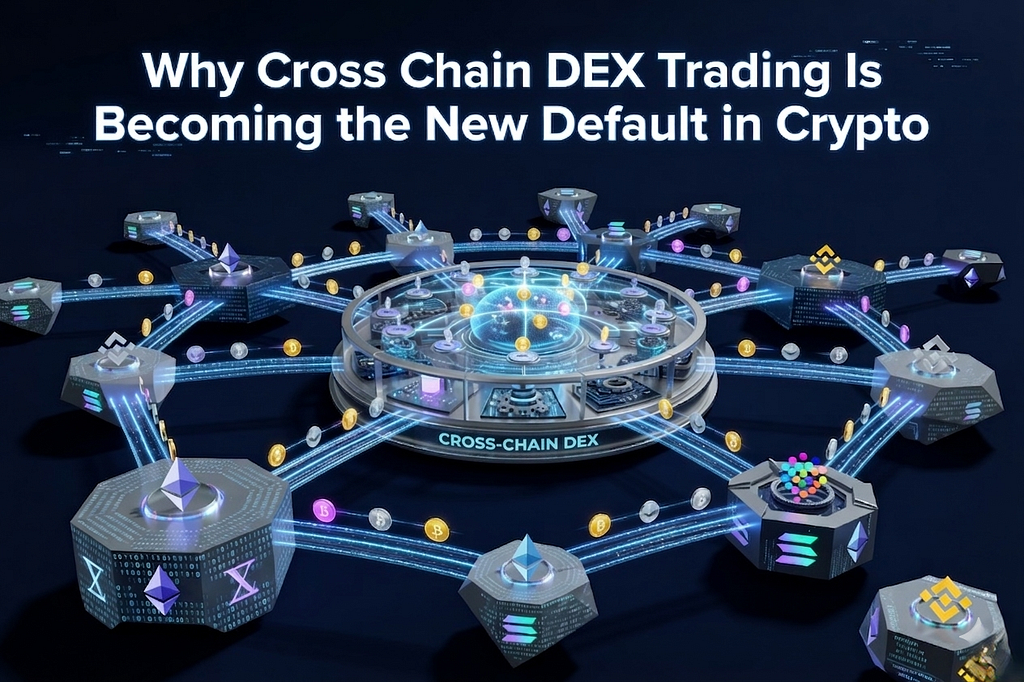
Image source: GeminiThe manner in which individuals conduct crypto trading has changed. Not slightly but structurally. A decentralized exchange platform which...