Another week, another wave of Elon Musk headlines. One of the most interesting of these to emerge recently, however, does not involve Twitter, the social media platform that Musk now owns. Instead, it relates to the revelations that executives at Tesla, the electric vehicle manufacturer that Musk founded, considered taking a stake last year in Glencore, the commodities trader.
The deal was never concluded. But the fact these discussions even occurred underscores a crucial point: Musk is increasingly nervous about supply chain risks around battery metals.
Tesla relies on minerals such as cobalt and lithium to make cars, and China controls around 80 per cent of global processing of these. Consequently Musk wants to diversify his supply, in case of a future China export ban. To put it in engineering terms, Tesla is confronting a “single point of failure” problem. And it is not alone. When future historians look back at 2022, they may frame it as the year when corporate executives became obsessed with Spof.
Consider this, if you like, the natural corollary of another four-letter acronym that crept into the C-suite over the past decade: Vuca, short for “volatility, uncertainty, complexity and ambiguity”, a phrase coined by the US military to describe an increasingly unstable, terrifying world.
To be fair, worrying about points of failure is not entirely new. Engineers have always fretted about Spofs in industrial machines. So have military leaders who handle logistics. And financial regulators confronted the issue during the 2008 financial crisis, not just inside separate banks, but across the entire banking ecosystem.
For an example, look at AIG Financial Products. Before 2008 numerous banks used derivatives to hedge their credit portfolios with AIGFP, which seemed like a sensible risk mitigation strategy when viewed from the perspective of an individual bank.
But when the 2008 crisis erupted, it became clear that so many companies had hedged with AIGFP, in exactly the same way, that it had created new concentrations of risk — or a form of Spof. The key issue, as Andrew Haldane, then head of financial stability at the Bank of England, noted, is that when networks lack diversity they become vulnerable to a single shock.
This was a bruising experience for financial regulators. But what is striking, in retrospect, is that the non-financial world seems to have learnt so little from it.
Until Vladimir Putin’s invasion of Ukraine in February, for example, there was only limited public debate among German industrial giants about the folly of their collective reliance on Russian gas. A decade ago, there was equally little discussion among American tech companies about their dependence on Taiwan for the supply of advanced computer chips. It was a stunning collective blind spot.
Similarly, prior to the Covid-19 pandemic, few western corporate leaders ever talked about the degree to which their healthcare systems depended on Chinese manufacturing for key medical supplies. The fact that the world’s shipping systems were so heavily reliant on the Suez Canal remaining open was also widely overlooked — until a ship got stuck in this choke point in 2021.
Or, to cite yet another example, there has been remarkably little policy debate in recent years about the degree to which countries from Greece to Ethiopia rely on a tiny, concentrated collection of underwater cables for their internet connections. This is unnerving, as the mysterious recent attack on the Baltic underwater Nord Stream pipelines shows.
A belated rethink is now under way in corporate boardrooms, since it has become clear that the trifecta of protectionism, war and climate change can threaten supply chains. The word “diversification” is suddenly all the rage among risk managers, both on a micro level (with Tesla seeking new sources of lithium, for instance) and a macro level (including Washington’s moves to incentivise more varied supplies of chips).
Another word, “redundancies”, is also in vogue, as companies try to build spare capacity to support diversification. And a third concept that is being embraced is fragmentation, as championed by the writer Nassim Nicholas Taleb in his book Antifragile.
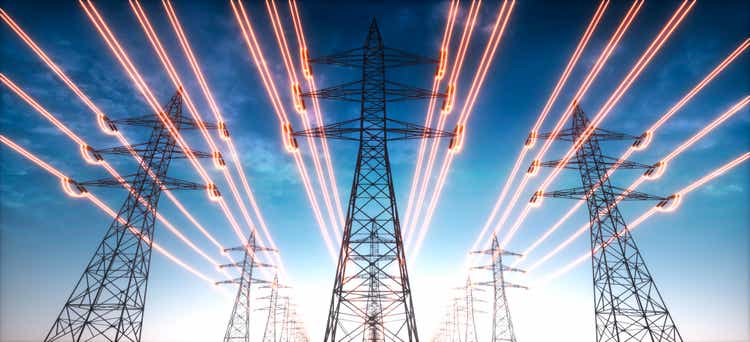
As Taleb notes, the problem with operating systems that are tightly interconnected, in the name of streamlined efficiency, is that these create contagion in a crisis. Electricity grids are a case in point. Thus one way to build resilience is to create systems that can fragment into separate parts if disaster hits.
It would be nice to think that these shifting preoccupations will create a more resilient world. It would be even nicer to hope this will occur before the geopolitical shocks worsen (particularly given that figures like Ray Dalio, the hedge fund luminary, are now loudly warning that we are sliding towards world war).
But this shift has one obvious big downside: executives’ desire to embrace redundancy, fragmentation and diversification will invariably create new costs. In other words, anyone who thinks the current wave of global inflation can just be blamed on central banks needs to think hard about Vuca and Spof. And then plug them into their valuation models — and not just for electric cars.