India’s fiftieth Chief Justice of India (CJI), Dhananjaya Y Chandrachud, retired on November 10, 2024. His elevation to this function in 2022 had sparked widespread expectations, together with within the realm of incapacity rights, given his prior work. Whereas many evaluations of Justice Chandrachud’s legacy have centered on his contributions to constitutional legislation and judicial reform, his work on incapacity rights has usually been relegated to a footnote. We goal to fill this hole.
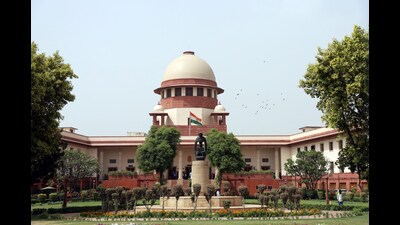
Administrative reforms for accessibility: Certainly one of Chandrachud’s most important administrative achievements was the institution of the Supreme Court docket’s Accessibility Committee, chaired by Justice Ravindra Bhat. This was the primary such initiative within the court docket’s historical past, aiming to systematically handle limitations confronted by individuals with disabilities (PwDs) throughout the judiciary. The committee proposed a variety of measures to reinforce accessibility, and a few of these have already been applied. As an example, an Accessibility Assist Desk has been arrange on the Supreme Court docket. Justice Chandrachud additionally facilitated the organising of Miti Cafe, an eatery within the Supreme Court docket run predominantly by PwDs.
That stated, Chandrachud’s daring and visionary intent didn’t at all times get translated into an equally proactive strategy by the court docket’s forms, as an illustration in evolving the modalities for enabling signal language interpretation of Structure Bench proceedings.
Judicial contributions to incapacity rights: The previous CJI’s judicial pronouncements mirrored a hard-to-match sensitivity to the challenges confronted by PwDs. Certainly, in his final week, he delivered three rulings with wide-ranging ramifications. First, in Om Rathod v. Director Common of Well being Companies and Ors., the Supreme Court docket paved the best way for a candidate with muscular dystrophy to pursue drugs. Quite than going by the evaluation performed by the Nationwide Eligibility-cum-Entrance Take a look at (NEET) Incapacity Boards which focus extra on incapacity than capability, the apex court docket appointed Dr Satendra Singh, the founding father of Medical doctors with Disabilities, to conduct an impartial analysis of Om Rathod to create a roadmap for his admission to the MBBS course.
The distinction in strategy led to a distinction in end result. Dr Singh discovered that, with an accessible surroundings and affordable lodging, Rathod might thrive in medical college. Not solely did the bench clear the best way for him to pursue drugs, it issued instructions to create many extra Om Rathods within the nation. These notably included directing the NMC to represent a board with appropriate disabled illustration to revise its incapacity evaluation norms and to provide you with up to date and extra inclusive tips.
Second, underneath the previous CJI, the apex court docket enabled two individuals with disabilities — Siddharth Sharma and Tishan Gangid — to turn into judicial officers, by insisting that the Rajasthan judiciary declare a separate cut-off for PwDs in its judicial service exams. The Court docket additionally issued tips for the declaration of separate minimal qualifying marks and cutoff for PwDs in all exams for recruitment to the district judiciary throughout the nation. That is more likely to facilitate the participation of extra individuals with disabilities within the nation’s judiciary.
Third, in Rajive Raturi v. Union of India and Ors., the Court docket directed the Union authorities to provide you with a set of non-negotiable accessibility norms in all sectors inside three months. It struck down the prevailing strategy of the Centre framing aspirational tips with no baseline stage of compliance which will be simply understood and meaningfully enforced.
Encouraging illustration: Chandrachud’s tenure was additionally marked by efforts to encourage the participation of PwDs within the authorized career. Notably, he allowed Sarah Sunny, a hearing-impaired lawyer, to look earlier than the Court docket with the help of an indication language interpreter. Whereas lengthy overdue, such measures assist convey individuals into the mainstream who have been in any other case confined to the margins. Nevertheless, these interventions should evolve from exceptions to straightforward practices with the onus being on the court docket, and never simply the lawyer involved, to make sure full and efficient participation.
The current CJI, Justice Sanjiv Khanna, faces the problem of constructing on Chandrachud’s legacy. Key priorities embody implementing the remaining suggestions of the Accessibility Committee, most notably formulating an equal alternative coverage for Supreme Court docket employees, evolving norms for offering pleadings in accessible codecs to attorneys with disabilities, and making incapacity coaching and sensitisation part of the Court docket’s annual calendar. The Supreme Court docket would additionally do nicely to make sure that attorneys with disabilities are inducted into its accessibility committee and prioritise the listening to and disposal of pending instances regarding PwDs.
Justice Chandrachud’s tenure has set a excessive benchmark, one which calls for not simply upkeep however steady enchancment within the quest for a really inclusive judiciary.
Rahul Bajaj & Vaishnavi Chaudhry are advocates. The views expressed are private