

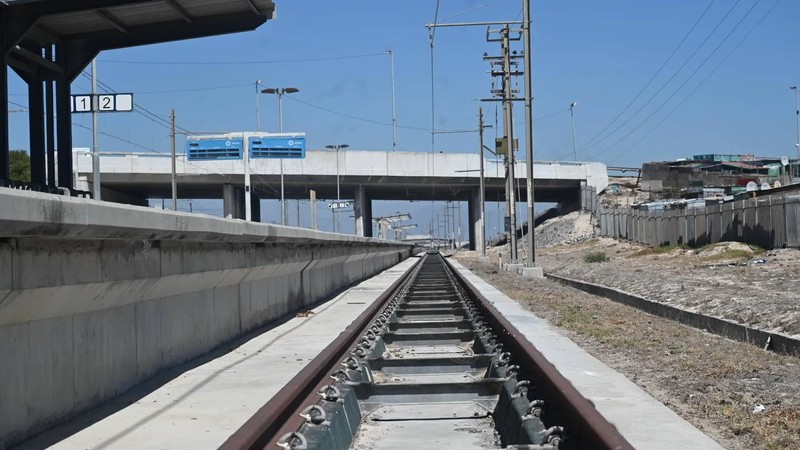
Throughout southern Africa, hundreds of kilometres of Cape gauge railway traces run by way of bustling cities, between inexperienced valleys, and alongside grassy savannahs. A reminder left of rail’s dominance just a few many years in the past, the image seems very totally different in the present day. Many of those railway traces are underutilised or deserted, with over 30% of Africa’s rail infrastructure at present inoperable. With commerce volumes projected to develop considerably, the urgency to revitalize rail infrastructure is obvious.
Availability is one other stumbling block for the continent’s rail sector. Most African nations common solely three kilometres per 1 000 sq. kilometres in comparison with excessive railway density nations similar to these in Europe, with 400 kilometres per 1 000 sq. kilometres. This scarcity of constructed railway traces additional exacerbates the affect of inoperable rail traces.
Out of necessity, Africa’s rail community has been changed as the popular mode for freight transport. As a result of vital shift to highway, varied short- and long-term highway infrastructure issues have developed. Visitors congestion has considerably elevated throughout the continent, with three of the world’s cities with the worst visitors delays located in Africa. Concurrently, highway infrastructure has been broken by the constant use of heavy freight autos. The frequency of enormous weight hundreds exerting stress on these public roads and highways have led to uneven tar surfaces, untimely pavement failure, and potholes.
From an financial perspective, the results have additionally been extreme. Africa strikes round 80% of products by way of highway networks, and over 40% of the ultimate buying worth will be attributed to inflated transport prices. For the SADC area, the financial affect is much more vital, as 90% of freight is transported by highway. Projections estimate that visitors volumes for landlocked SADC nations will develop by 8.2% yearly till 2030 and that commerce volumes may also develop over the following 5 years, additional stressing the urgency to alleviate commerce’s reliance on highway.In response, authorities organisations have developed long-term enlargement plans, such because the African Union’s Programme for Infrastructure Growth to construct a further 30 200 km of rail networks by 2040. If realised, this enlargement would enhance Africa’s rail community by 4 occasions its present measurement throughout the subsequent 5 years. Nevertheless, restricted progress has been made, with solely 4 000 km of expanded railway line carried out thus far.
One of many most important limitations stopping railway infrastructure enlargement from progressing is an absence of funding. In whole, Africa wants an estimated $130-$170 billion yearly for infrastructure. African governments can’t shut this funding hole alone and have solely managed to cowl roughly 40%.
Other than this consequential funding hole, the rail sector can also be successfully competing towards different infrastructure industries that provide non-public buyers decrease threat environments and shorter return-on-investment phrases. Whereas vital funds are being invested into different infrastructure areas, similar to renewable power era and ports, there was a marked decline in rail community funding.
Many economists have pointed to public-private partnerships as a silver bullet resolution to shut this funding hole, together with for the rail sector. Whereas this has been a workable resolution for different infrastructure sectors in Africa, rail enlargement can’t be approached in the identical, spinoff means. The rail sector requires giant sums of funding on twin platforms: railway traces and rolling inventory. The one relies on the opposite to maneuver freight volumes and passengers.
Regardless of this dependency, a unique funding strategy might be the answer to maneuver Africa’s rail business ahead. The stark actuality is that there’s restricted non-public sector funding urge for food in relation to railway line infrastructure. To this point, an absence of financial institution feasibility, excessive capital necessities, and lengthy venture tenures have given the non-public sector purpose to pause.
That is the place growth finance establishments (DFIs) are uniquely positioned to get Africa’s rail sector again on observe. DFIs can add super worth from each a funding and venture feasibility perspective. In the case of infrastructure plans, Africa has by no means fallen brief – it’s migrating from the planning section into implementation, the place the shortfall happens most frequently.DFIs with expertise in funding and facilitating initiatives in Africa perceive this. Consequently, these monetary establishments are earning profits accessible for complete feasibility research. By beginning future rail tasks with funded and credible feasibility research, actionable steps will be recognized to show rail infrastructure tasks into bankable investments.
By eradicating this deterrent for personal buyers, DFIs can turn into the bridge between Africa’s railway infrastructure wants and public-private partnerships. From conceptualisation and feasibility to implementation, DFIs even have the experience to allow disciplined venture frameworks for capital allocation, strategic benchmarks, sustainable constructing practices, and operational upkeep, additional growing rail tasks’ bankability.
In flip, industrial banks are more and more keen to finance rail tasks, significantly when feasibility and threat mitigation are in place. The optimum path ahead lies in a collaborative mannequin the place DFIs and banks work in tandem—DFIs supporting early-stage growth and feasibility, and banks offering long-term financing for implementation and rolling inventory funding.
Progress in railway infrastructure enlargement will stimulate rolling inventory funding. Right here, public-private partnerships can take the lead. Refurbishing heavy-haul locomotives and wagons have already been confirmed as a worthwhile funding in African nations similar to South Africa, Namibia, and Kenya. Concurrently, industries that kind the spine of economies and are closely reliant on rail transport, similar to mining and agriculture, ought to be incentivised by authorities to spend money on rolling inventory.
Funding within the enchancment of rail networks by way of sustainable financing and infrastructure growth tasks can unlock the economies for African nations, fostering financial development, helping the expansion and growth of markets which have international relevance, key tenants of B20 South Africa. Although sections of Africa’s rail community might have been uncared for, it definitely has not been forgotten. With the backing of DFIs, the collaboration of governments, and the funding from the non-public sector, the continent’s rail sector might be enabled to maneuver ahead on the identical, economically viable, and sustainable observe.

Mornè Visagie, Head: Structured Belongings Finance, Absa CIB
*** The views expressed right here don’t essentially symbolize these of Impartial Media or IOL.
BUSINESS REPORT