
Mark J. Higgins, CFA, CFP, is the author, with Elliot Chambers, of “The Panic of 1819, Silicon Valley Bank and the Dangers of Bank Runs,” from the Summer 2023 issue of Financial History.
“The demand for lands since the 1st July seems as great as ever; all payments are made in the Mississippi Stock — which is sold at 25 percent discount . . . the demand for lands is so great I have not time within office hours to attend to my returns or books.” — Nicholas Gray, Land Office Clerk, 1816
On 10 April 1815, Mount Tambora, a volcano on the Indonesian island of Sumbawa, exploded in the largest volcanic eruption in recorded history. The volcano ejected an estimated 31 cubic miles of rock and ash and claimed at least 70,000 lives.
But the eruption’s effect on the climate was far more deadly and disruptive.
The volcano sent an enormous cloud of sulfur dioxide into the upper atmosphere that repelled sunlight and temporarily cooled the planet by an estimated 1 degree Fahrenheit or around 0.5 degrees Celsius. The disaster’s impact peaked in the summer months of 1816, the so-called Year without a Summer. Crop yields collapsed throughout the world, creating a shortage of agricultural commodities and a sharp rise in prices — especially for wheat and cotton.
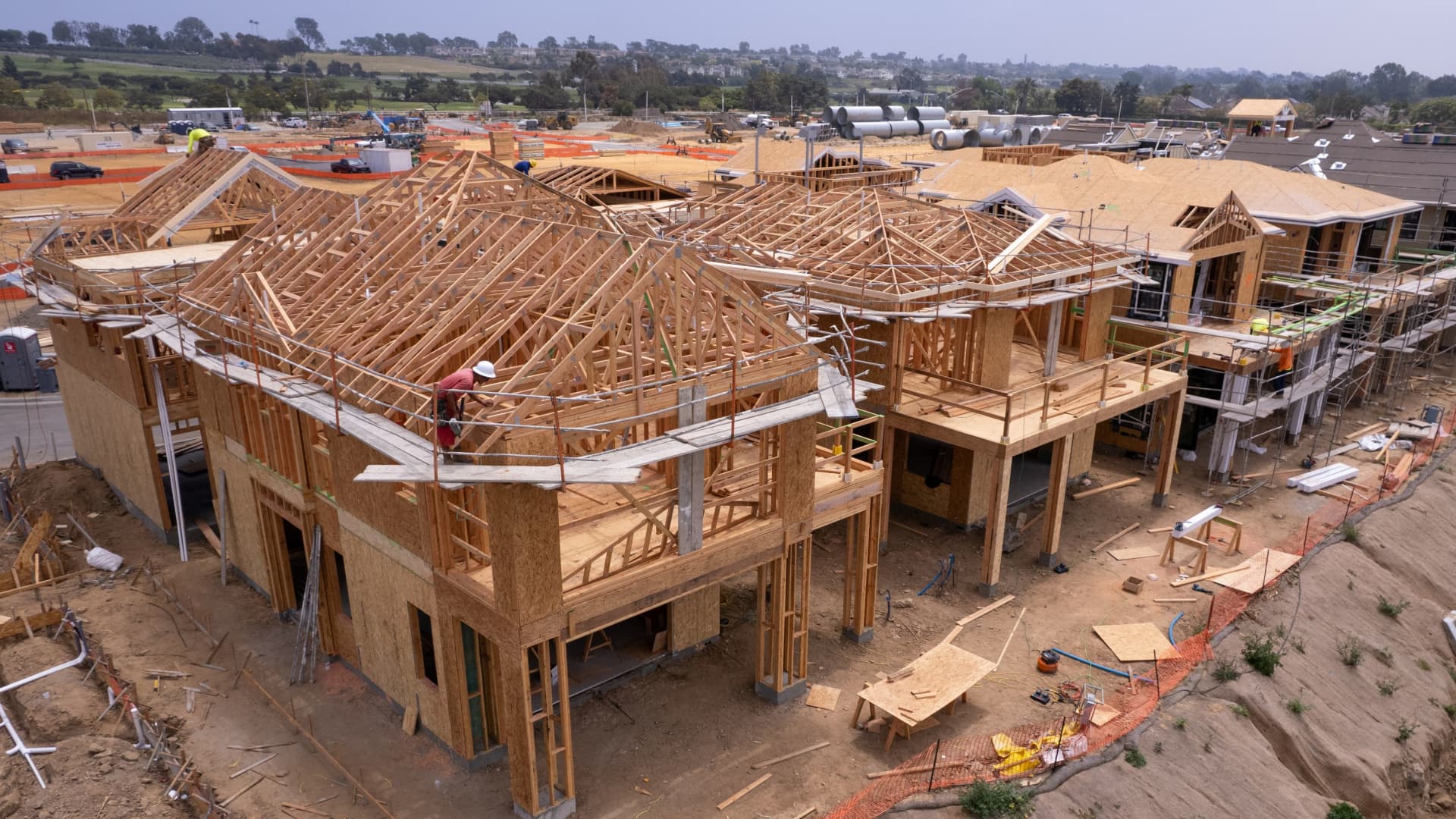
European farmers were hit especially hard, and countries increased imports to feed their populations. The US experience was less catastrophic but still painful. New England suffered the most due to the harsher effects of cold weather in the northern latitudes. Thousands of US farmers sold their land and headed west. The appeal was twofold. First, they could purchase larger tracts of farmland. Second, crop prices went up. For example, wheat prices rose nearly 25% by year-end 1816 and more than 50% by year-end 1817. The combination of more acreage and higher prices looked like the ultimate win–win situation. The following graph shows the sharp rise in land purchases in just one county in what became the state of Mississippi.
Total Land Sales, in Acres, Washington County, Mississippi

Source: Malcolm J. Rohrbough, The Land Office Business: The Settlement and Administration of American Public Lands
The First Great Depression
“The bank bubbles are breaking . . . the merchants are crumbling to ruin, the manufacturers perishing . . . there seems to be no remedy but time and patience, and the changes of events which time affects.” — President John Quincy Adams
The global cooling caused by the Mount Tambora eruption was intense but short-lived. Unlike carbon dioxide, sulfur dioxide naturally dissipates from the atmosphere within a few years. By 1818, sulfur dioxide levels returned to pre-eruption levels, and global temperatures normalized.
Owners of Midwestern farmland suddenly faced financial ruin. Many had taken on enormous loans to purchase plots at prices that could only be justified if crops sold at elevated rates for many more years. Instead, robust harvests and the huge expansion in agriculture fueled a global supply glut, and prices plummeted. By 1820, wheat prices had fallen by approximately 60% relative to 1817.
The decline of agricultural commodity prices triggered a collapse in US land values as farmers and speculators adjusted their revenue forecasts. At the same time, the Second Bank of the United States, which began operations in 1817, reversed many of its lending policies to keep its dwindling reserves from eroding further. This reduced the money supply and intensified the economic contraction. Falling commodity prices, collapsing land values, tight monetary conditions, and highly indebted landowners were too much for the economy to bear. No single event marked the beginning of the Panic of 1819, but the financial misery that followed rivaled anything that the nation had experienced before and is sometimes referred to as the first Great Depression.

Lessons from the Eruption of Mount Tambora
The eruption of Mount Tambora occurred more than 200 years ago, but it has many lessons that are still relevant today. I detail several of these in the Summer 2023 issue of Financial History magazine and a few more below.
1. The Danger of Herd Behavior
“That’s the dilemma we face. Over the next 15 years, instead of having these beautiful fields and orchards [alternative assets] to ourselves, there’s going to be a lot more money and a lot more competition. One has to predict that it’s going to be much tougher for endowed institutions to preserve their performance advantage.” — Laurance (Laurie) R. Hoagland, Jr., former CIO of the Hewlett Foundation
Humans have a strong instinct to follow the crowd. This bias was hard-wired into our brains over hundreds of thousands of years because it was critical to our survival. When early humans identified an attractive resource and harvested it or recognized a hidden danger and fled from it, their neighbors often did the same. For most of human history and in many different contexts, this approach worked and continues to work, and later arrivers gain just as much benefit as the first movers.
But the herd instinct does not work in the investing world. In fact, it backfires. As the herd flocks to new investments, the price goes up and quickly exceeds the intrinsic value of the asset. Then, once the supply of new investors dries up, the asset crashes. A small number of early adopters may profit from undiscovered investment opportunities, but followers are virtually guaranteed to come up short.
The farmers and speculators of the 1810s differ little from modern victims of herd behavior. They suffered the same consequences as retail investors who piled into dot-com stocks, residential real estate, cryptocurrencies, non-fungible tokens (NFTs), and now artificial intelligence (AI) stocks. This behavior is also common among institutional investors, who have substantially increased their alternative asset allocations only to be disappointed with the returns, as Laurie Hoagland all but predicted 15 years ago.

2. The Danger of Fighting the Current of Time
“Their delusion lies in the conception of time. The great stock market bull seeks to condense the future into a few days, to discount the long march of history, and capture the value of all future riches. It is his strident demand for everything now — to own the future in money right now — that cannot tolerate event the notion of futurity — that dissolves the speculator into the psychopath.”
That is how James Buchan, the author of Frozen Desire: The Meaning of Money, describes the behavior of participants in perhaps the greatest asset bubble ever, France’s Mississippi Bubble of 1717 to 1720. Like most financial catastrophes, it originated in an attempt by investors to cheat the powerful current of time. A distinguishing feature of history’s best investors — the Hetty Greens, Warren Buffetts, and Charlie Mungers — is their ability to align their investment behavior with the inflexible flow of time. In a word, they are patient. They understand that successful investing is more like watching the grass grow than winning the lottery. But those caught up in investment fads, whether it is Midwestern real estate in the 1810s or AI investments in the 2020s, often suffer from a compulsion to compress the time required to turn a little money into a lot. This is why there will almost always be many more losers than winners whatever the latest investing craze may be.
3. Buying Time with Sulfur Dioxide Emissions
“Solar radiation modification (SRM) is a potential complement to other tools available to address climate change: mitigation of greenhouse gas emissions, removal of carbon dioxide (CO2) from the atmosphere, and adaptation to existing and expected changes to climate. SRM offers the possibility of cooling the planet significantly on a timescale of a few years.” — “Congressionally Mandated Research Plan and an Initial Research Governance Framework Related to Solar Radiation Modification,” June 2023
The last lesson comes with a huge caveat because it involves a rather extreme and undesirable proposal.
That the planet is rapidly warming and that CO2 levels are the most important driver is generally accepted as fact. Thus far, however, we are not moving fast enough to reduce CO2 emissions. Over the next several decades, the race between the forces of nature and human ingenuity will determine how much the world warms and when and where temperatures will plateau.

The long-term solution to climate change will involve sharp reductions in fossil fuel emissions and maybe innovations that remove greenhouse gases from the atmosphere. But given the slow pace of progress, we may need to consider alternative tactics to buy time. In June 2023, the White House released a congressionally mandated report that explored the use of solar radiation modification (SRM) to slow climate change. One potential tactic is to replicate the effects of a major volcanic eruption by releasing large amounts of sulfur dioxide into the upper atmosphere.
This may seem farfetched, but Mount Tambora’s eruption demonstrates that the science works and works quickly. Of course, the logistics and financial feasibility of such a project are yet to be determined, and its side effects — sulfur dioxide produces acid rain and may deplete the ozone layer — could be steep, even unbearable.
But uncertainties aside, that the experience of the Mount Tambora eruption not only has lessons for investors more than two centuries later but might also contribute to solving one of humanity’s most pressing modern problems shows the value of studying financial history and looking to the past to inform the present and shape the future.
For more financial history lessons from Mount Tambora and beyond, don’t miss Investing in U.S. Financial History from Mark J. Higgins, CFA, CFP, or his larger exploration of the Panic of 1819, with Elliot Chambers, in Financial History.
If you liked this post, don’t forget to subscribe to the Enterprising Investor.
All posts are the opinion of the author. As such, they should not be construed as investment advice, nor do the opinions expressed necessarily reflect the views of CFA Institute or the author’s employer.
Image courtesy of Jialiang Gao. This file is licensed under the Creative Commons Attribution-Share Alike 3.0 Unported license. Cropped.
Professional Learning for CFA Institute Members
CFA Institute members are empowered to self-determine and self-report professional learning (PL) credits earned, including content on Enterprising Investor. Members can record credits easily using their online PL tracker.