
Over the past few years, the industrial sector experienced record growth. Ever-increasing investments are pouring in, but the road ahead is not without challenges and concerns.
“There are multiple issues that are pressing industrial users right now, including global instability, supply challenges and labor concerns. Many of these challenges are resulting in inflation, causing an increase in many of the inputs in manufacturing and distribution which, in turn, are being passed on to the consumer,” Gregg Healy, executive vice president & head of Savills Industrial Services Group in North America, told Commercial Property Executive.
Healy manages the Savills’ industrial practice in the U.S. and Canada. He is an expert in third-party logistics and supply chain management, having worked both as a real estate advisor and a logistics and manufacturing leader. Read on for Healy’s expert analysis of the most pressing economic headwinds facing the industrial sector today.
READ ALSO: Industrial Market Trends, Takeaways From SIOR CREate 360
How influential are current shifting e-commerce trends for industrial development?
Healy: This is an issue of short-term versus long-term investments. Recently, there has been a retraction in the percentage of retail sales in the U.S. that are initiated via an e-commerce portal, from a peak of about 19 percent to about 16 percent today. This could be for multiple reasons, such as post-pandemic pent-up demand to shift spending to services or physically visit retail stores or increased costs of purchasing products online due to increases in transportation or delivery costs.
Despite e-commerce slowing down a bit, the longer-term outlook is still strong for e-commerce as projections expect e-commerce to consist of roughly 25 percent of all retail sales in just a few more years.
A wider variety of product is becoming available online, with brick-and-mortar retailers adjusting their sales channels to provide both physical and digital opportunities to shop. Also, if you look to other countries—particularly in Asia where they are more advanced in their adoption of e-commerce—China already has about 46 percent of total retail sales leveraging e-commerce platforms today, and is expected to grow by about 10 percent more in the next several years. We still have room to expand e-commerce penetration in the U.S., as well. Real estate tends to be a longer-term investment, so looking at the longer trends, industrial development supporting the distribution of goods purchased online seems to still be a very wise strategy.
Oversupply has become an issue in some markets. In your opinion, what contributed the most to this situation?
Healy: The concern with oversupply of industrial space in some markets is related to the quick pivot of institutional and general investment capital at the beginning of the COVID-19 pandemic to industrial real estate. With both office and brick-and-mortar retail heavily impacted by reduced foot traffic, the industrial market was poised to be the best vertical for commercial real estate investment. But as the capital flowed into this vertical, cap rate compression in core industrial markets pushed development into many secondary and tertiary markets—markets that could not support the development, either by lacking the consumer market demand for space or being too far out from consumers to make economic sense given the high percentage of costs associated with transportation for companies distributing product.
Without a comprehensive understanding of how users calculate the best locations to be in to maximize service level and maintain lowest possible transportation costs, industrial development has expanded too rapidly in some markets that may become quite elastic in better locations where occupiers can operate at a lower total cost.
We have also seen some extreme rent growth in core markets, such as port regions. Do you expect this to continue, or is it looking like it has reached a peak?
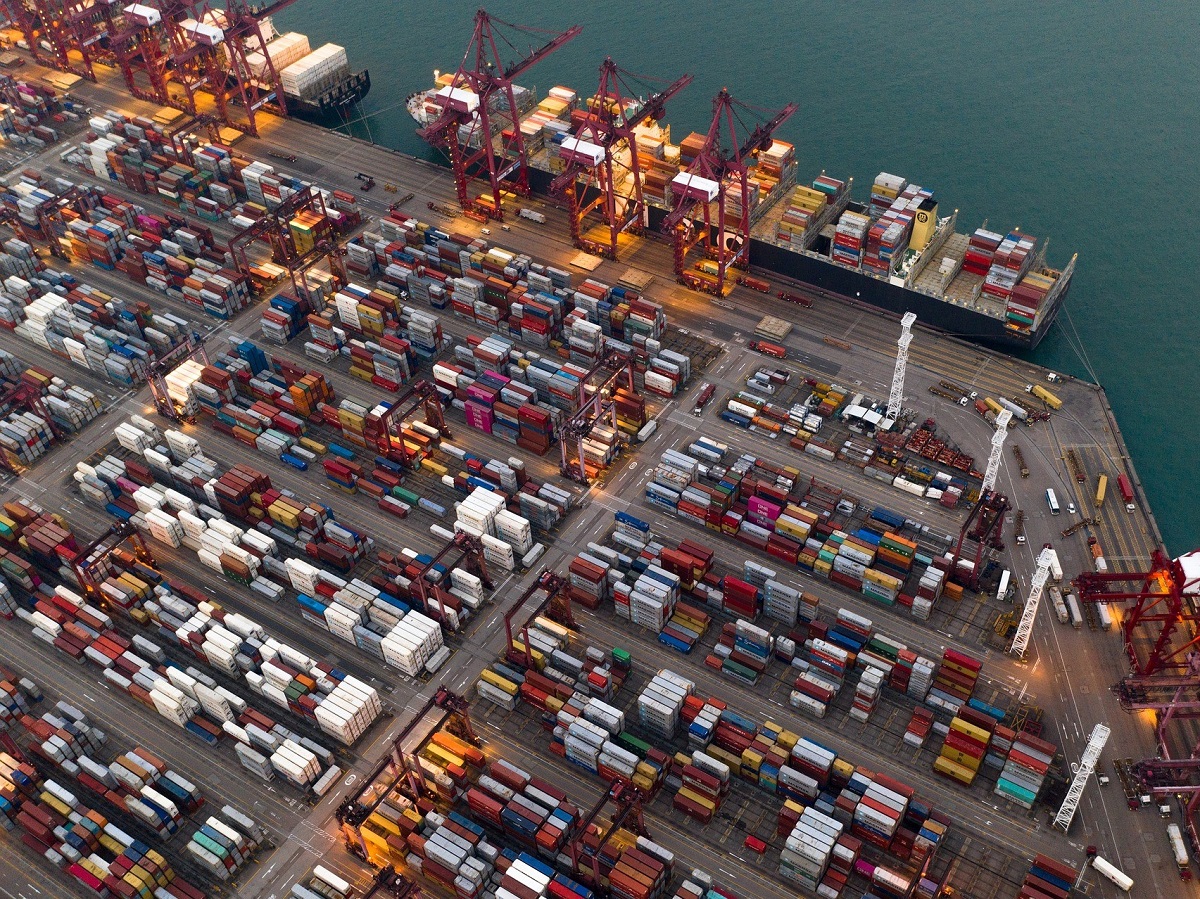
Healy: The past two years have seen record levels of growth in goods imported to this country. 2021 marked a record-high volume of containers reaching our shores from foreign ports, with many ports seeing 15 percent or more volume growth over 2020. Thus, in parallel to this growth, there has been an additional level of growth in the demand for storage of these goods close to ports as their initial touchpoint when received.
If we continue to increase our reliance on imported goods, as well as see e-commerce grow—as it typically requires three times as much space as a regular B2B warehouse—the demand for space will only put additional pressure on industrial requirements. As we continue to see growth of both air cargo and goods being shipped from our southern border, we shall see industrial growth around these ports of entry. It is no longer just the seaports that are the beneficiaries of international trade.
Are the current demand levels resulting in more aggressive investment strategies? If so, how do you expect this to evolve?
Healy: I don’t think the word “aggressive” is the correct word. I think the right descriptors are “creative” and “well-researched.” When it comes to developing a strategy around how to invest in industrial development right now, you must understand the key drivers of tenants in the market. As institutional capital grows in the industrial vertical, there has been a pointed compression of cap rates for industrial facilities. With Amazon announcing a slight reprieve from their aggressive growth strategy, along with recent rate hikes, there may be some easing of cap rates in the short term.
The bottom line is that commercial real estate is a long-term hold, and there will always be bull and bear markets. The critical thing to remember is to shift the lens of the investment to best understand what industrial users will need, not just as an investment.
What kind of community pushbacks are developers seeing, and what strategies are effective in managing these situations?
Healy: One of the biggest pushbacks that developers are seeing is the issue of communities not wanting further industrial development in their cities. They associate additional warehouses and distribution centers with more truck traffic, pollution and low-wage jobs. This is not the case. Industrial facilities, both manufacturing and distribution, are evolving quite rapidly. No longer are they just employing large quantities of low-skilled temporary labor. Now, industrial facilities are continuously moving upmarket, with start rates often higher than retail jobs and with a higher demand for the skills of tomorrow around computer systems, robotics, AI, VR, and logistics technologies around transportation and inventory management.
The issue with diesel trucks causing noise and pollution is also changing—more regulation and an improved cost-per-mile structure will begin to shift those trucks to electric vehicles. This reduces both noise and pollution in neighborhoods. Lastly, once perceived as a nuisance, having an e-commerce fulfillment center nearby will begin to be perceived as a positive as more people will have access to a wider variety of goods more quickly, without leaving their homes.
What can we look forward to in terms of resilience strategies? Which do you think will be most effective in the coming years?
Healy: The most effective way to build resilience is to understand the key drivers in what the users of industrial real estate need. They are having to balance cost, service, speed, ESG and resilience, while focusing on their clients. It is not just about putting more buildings on a map, it is about having the right size, configuration and location for the markets where tenants need to locate their business. As we see a shift in manufacturing toward nearshoring or onshoring, one can expect to see greater demand for manufacturing sites with greater access to low-cost utilities, infrastructure and sustainable labor markets. Bringing the global supply chain closer to home increases resilience and will remain a trend in the short and longer terms.
How are providers of industrial space dealing with the lack of land availability in core markets? Will we see more redevelopment of older stock and/or a focus on deferred maintenance, for example?
Healy: This is a mixed bag. The challenge is that many times the best location for distribution is as close as possible to major consumer markets. The availability of large sites in these markets is slim or too expensive to redevelop from its current use. Thus, the alternative is acquiring smaller sites in urban markets for last-mile distribution.
In a perfect world, the need for an additional node in the supply chain would not be required, but because of the lack of available sites, large distribution hubs are built on the outskirts of major markets. If the economy turns, this will slow down the transition from other less in-demand property types to industrial as there may be an excess of industrial sites on the market, easing some of the pricing issues and tenants may move to better sites that are closer to their key customer demographic areas without needing to redevelop a site because no other options are available.
The most important thing to consider is that transportation is really the driver in distribution networks and the cost of delivering a product increases as we get closer to the consumer. Thus, location is the most important factor to consider and, if you have a great location, the likelihood of somebody being able to adapt to fill their business need only increases.
How does the future look for industrial providers? In your opinion, what do owners have to look forward to, in terms of new technologies and the evolution of current trends?
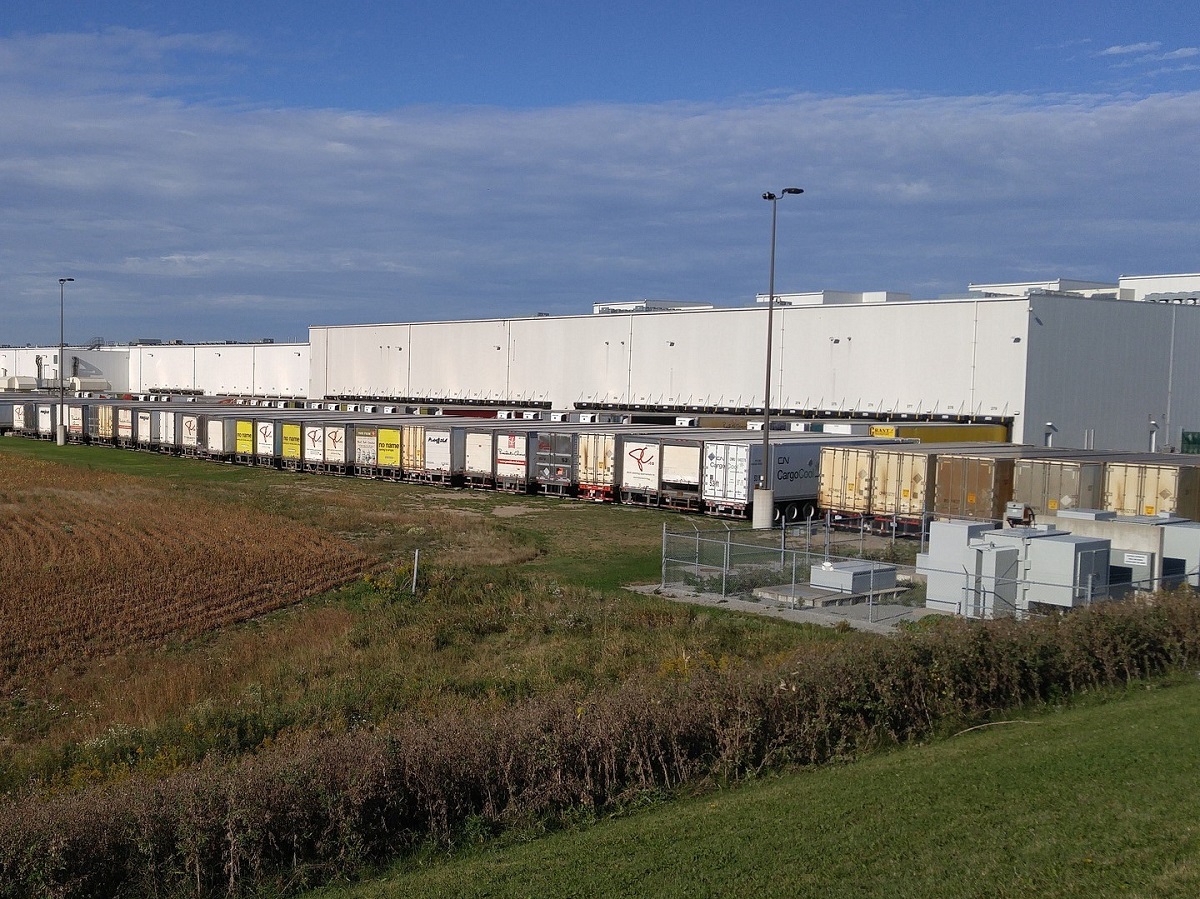
Healy: We can anticipate a further investment in automation to support manufacturing and distribution industrial users. This means that there will be a higher level of investment in sites users. More investment in automation means users will look for sites that have greater flexibility within the space to accommodate the infrastructure for automation. More automation means larger needs for power as well. As a higher skill level of worker will be needed in these operations, a higher level of buildouts such as office and common amenities will also be expected by end users. Yards will need to be built around speed, which means space for staging of trailers and vehicles for both inbound and outbound shipments. Docks should be prewired to support the electrification of fleets – both inside and outside the facilities.
As the investment increases in these sites, security at these sites will be important, as well. All aspects of the building, both inside and outside the facility, should be considered as part of an integrated strategy to lower operating costs and increase efficiency.