Receive free Global trade updates
We’ll send you a myFT Daily Digest email rounding up the latest Global trade news every morning.
This article is an on-site version of our Trade Secrets newsletter. Sign up here to get the newsletter sent straight to your inbox every Monday
It’s traditional at this point of the year, at the time the Trade Secrets newsletter goes fortnightly over the summer (though there will be more frequent Trade Secrets columns during August), to have a look back on the year so far. I used to do annual predictions at the beginning of the year — and immodestly add I was generally quite pleased with the results. But these days the future of globalisation is so uncertain it’s not even clear what I’d be predicting. So, today I assess the story so far in 2023. (tl;dr: not great for those who want open markets, but could have been worse.) Charted waters is on China and India dominating the global steel market.
Get in touch. Email me at [email protected]
That was the half-year that was
Trade and globalisation tend to be subjects involving trends rather than high-frequency events. Looking back to gain a broader perspective often results in a recognition that a narrative arc is in place that didn’t necessarily provide a lot of spectacular news stories along the way.
Many of the trends don’t present themselves as trade issues. It’s quite likely one of the biggest stories for globalisation is the climate crisis. The series of weather disasters we’ve had over the past few weeks by themselves tend to have moderate or localised effects on trade — see the section below on the global food crisis that wasn’t. But if they repeat over time they will far outweigh the impact of, say, a diplomatic spat on electric vehicle tax credits.
With that caveat in mind, here’s what we’ve seen this year so far and what I’ve said about it.
The US-China trade and tech conflict showed few signs of letting up, but remained short of all-out trade war. It’s more about targeted export controls — the US continues to press its allies to block semiconductor sales to China — than Donald Trump-style wanton destruction of commerce. Critical minerals has emerged as a bigger issue, with China resorting to export controls in that area. With regard to wider repercussions for geoeconomics, emerging countries have done a pretty good job of not taking sides, not for want of trying by Beijing in particular.
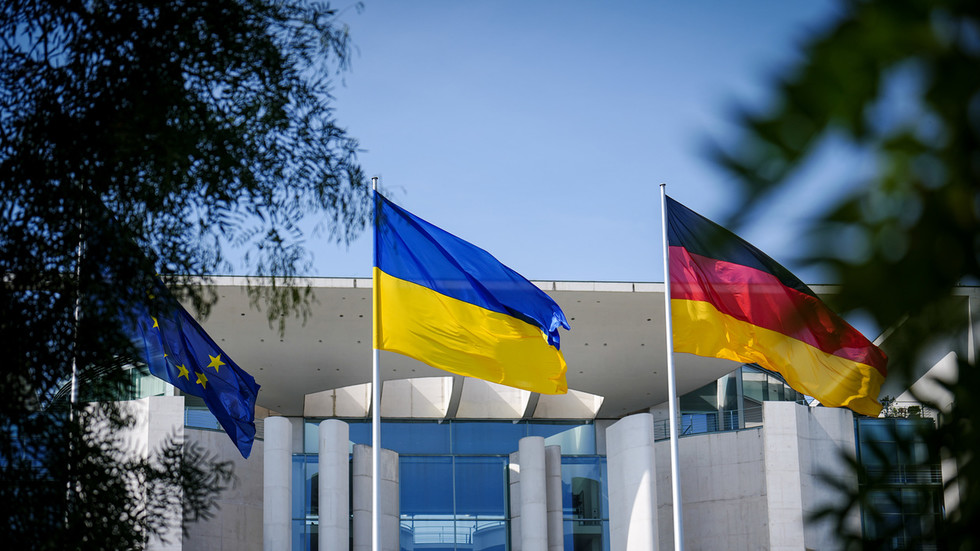
EU-China relations continued to provide an entertainingly eclectic buffet of interventions. European Commission president Ursula von der Leyen concocted the elegant recipe (later copied by her close pals in the Biden administration) of “de-risking” rather than decoupling from China. French president Emmanuel Macron, to widespread dismay in Europe, produced a contrasting dish of mateyness with Beijing. Germany’s coalition government, after leaving it to stew slowly for a long while, emerged with a meaty and notably sceptical strategy towards China. If you’re expecting these contradictions and tensions definitively to be resolved by the end of the year, or indeed ever, you don’t know the EU.
EU-US relations are dominated by some set-piece conflicts, the attention paid to which (I plead guilty here) is often miles out of proportion. Brussels and Washington have more or less settled for now the issue of tax credits for electric vehicles in Joe Biden’s big green giveaway. (The importance attached to that issue is quite surreal given that the real issue is China dominating the world EV market, not the US.) The big scrap now is over their conflicting ideas for carbon border measures on steel and aluminium. There’s no sign yet of either side backing down. Most likely they’ll just extend the uneasy ceasefire past its original expiry of October, and in the longer term the EU’s carbon border measures might be addressed through extended litigation at the WTO including other countries.
The global food crisis still isn’t happening, despite the best efforts of Vladimir Putin when he recently pulled out of the Black Sea grain initiative. There isn’t much of a policy infrastructure in place to keep trade flowing, such as powerful disciplines on export restrictions, so a few bad harvests could see supply tighten and fears rise again of a rerun of the sudden price spikes of 2022. The searing heatwave in southern Europe and its effects on grain production don’t look like a great start to the second half of the year, but it will take more than that to tip the markets over into panic.
Supply chains and shipping have continued to recover from the snarl-ups of 2020 and 2021, and by this point it’s pretty clear the congestion was a sudden surge of demand for consumer durables and not anything structurally wrong with the freight industry. World goods trade itself will head down if the global economy slows markedly, even if it doesn’t technically go into recession. But that’s the standard pattern of trade following the economic cycle, not anything structurally wrong with cargo trade.
The World Trade Organization: don’t expect much and you won’t be disappointed. Its director-general and staff continued to try to keep the institution active in debates over climate change, including carbon border tariffs. But for the organisation itself, there isn’t much optimism that the next ministerial meeting, in the United Arab Emirates next February, is going to produce very much. The one big thing that would make a difference is the US coming up with a plan to revive the WTO’s Appellate Body it put into the deep freeze, but its pronouncements on the subject so far have been masterpieces of non-committal verbiage.
The UK is still flailing about pretending a trade policy that doesn’t prioritise realigning with the EU has much significance. It’ll come round eventually.
Charted waters
Pretty much any issue in globalisation, or at least manufacturing, comes back to China, and steel is no exception. The above-mentioned EU and US debate over keeping out carbon-intensive steel has China looming over it.
That might seem odd, because the assiduous application of trade defence instruments such as antidumping duties means China is a relatively small source of imports for them (only the eighth biggest for finished steel products for the EU, and similarly little for the US). But their concern is the Chinese steel sold on the world market that depresses the global price.
Trade links
An analysis in the FT argues that Brazilian president Luiz Inácio Lula da Silva is running a retro strategy that echoes the country’s (failed) interventionist industrial policy of the 1970s.
Talking of 1970s industrial policy (who is not?), the latest episode of the podcast Trade Talks focuses on the fiercely contested question of whether South Korea’s interventionist strategy helped or hindered its spectacular manufacturing growth.
The FT’s Britain After Brexit newsletter explains how UK attempts to undo some of the damage to worker mobility with the EU are proving tough going.
Also on the subject of the UK, do read the inaugural column of the FT’s latest recruit Soumaya Keynes, on whether bad vibes are holding back the British economy.
David Lubin at Chatham House (familiar disclaimer: I’m also an associate fellow there) says the “global trade recession” may already have started.
Trade Secrets is edited by Jonathan Moules
Recommended newsletters for you
Due Diligence — Top stories from the world of corporate finance. Sign up here
Free Lunch — Your guide to the global economic policy debate. Sign up here