“Houston, we’ve got an issue.” The long-lasting Apollo 13 line feels oddly becoming for South Africa’s newest headache: the “Afrikaaner genocide” narrative making waves in US-South Africa commerce talks.
This exaggerated declare, fueled by photos of crosses symbolising farm murders, paints a distorted image of crime in South Africa, ruffling feathers globally. It is a headache for the nation’s status overshadowing its “Rainbow Nation” legacy.
To navigate this storm, South Africa should confront the misinformation head-on whereas addressing the basis causes – crime, unemployment, and governance failures – with decisive motion.
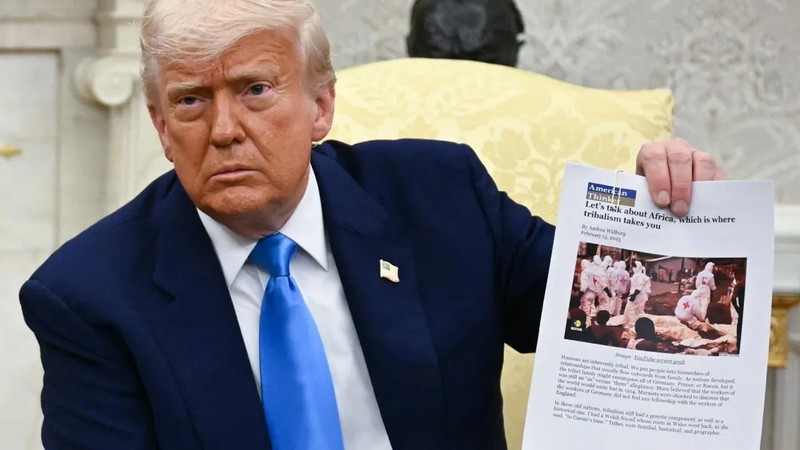
The “Afrikaaner genocide” narrative gained traction in the course of the latest White Home assembly, the place US President Donald Trump introduced video clips of Financial Freedom Fighters (EFF) chief Julius Malema chanting “Kill the Boer,” an apartheid-era wrestle track.
The South African delegation, led by President Cyril Ramaphosa, dismissed the EFF as a minor political celebration, however the harm was performed. The mantra, paired with photos of white crosses, bolstered a story of focused violence towards Afrikaners, sticking within the world creativeness.
On the Google Zeitgeist occasion in London final weekend, I confronted questions from enterprise leaders about this so-called “genocide”. I used to be amused by how misinformation travels – but annoyed by its persistence. This distortion, like a comedic skit flipping tragedy into exaggeration, stems from an actual difficulty: South Africa’s large crime drawback.
Crime in South Africa is extreme however not genocidal.
Police Minister Senzo Mchunu set the document straight on the newest crime stats launch on Friday. From January to March 2025, South Africa noticed 5 727 murders (62 every day), 10 688 rapes, and 4 571 kidnappings. These numbers are grim however minimize throughout all communities – not a focused “genocide”. Mchunu debunked a viral picture of crosses in KwaZulu-Natal, tied to a 2020 farm homicide case the place justice was served, with suspects convicted.
“We now have respect for the USA as a rustic, we’ve got respect for the folks in that nation and for President Trump, however we’ve got no respect for this genocide story – in any respect. It’s completely unfounded and unsubstantiated.”
He additional mentioned, “We don’t deny that the degrees of crime within the nation are excessive – we’re very involved. Crime cuts throughout all divides. We’re at present intensifying the combat towards crime and criminals. The crime states we’re presenting at present will present progress; we commend and encourage the SAPS (South African Police Service) to combat on and more durable. We’ll win.”
Regardless of these clarifications, the narrative persists, amplified by world figures like Elon Musk, who has claimed on X that South Africa promotes “white genocide” and that his Starlink service was denied a license because of his race. This misinformation travels quick and sticks, overshadowing South Africa’s broader crime disaster, which is tied to a 31.7% unemployment price (Q1 2025) and systemic inequality.
The financial backdrop makes addressing crime even more durable. The latest Price range 3.0, finalised after two failed makes an attempt, slashed R68 billion in spending over the medium time period and downgraded 2025 GDP progress to 1.4% (from 1.9% in March). This fiscal squeeze, reflecting a “bottom-of-the-barrel” economic system, limits sources for policing and job creation.
The funds course of itself, marred by political wrangling, underscores South Africa’s status as an “prolonged discuss store” the place rhetoric usually trumps motion. This notion of inaction feeds into the worldwide narrative, making it more durable to counter the “genocide” label and appeal to funding.
Worse, the commerce talks uncovered one other complication: the proposed Starlink deal. Studies recommend the federal government might bypass Black Financial Empowerment (BEE) legal guidelines by way of “fairness equal” preparations, permitting Starlink to put money into growth tasks as a substitute of ceding fairness. This transfer, whereas pragmatic, dangers undermining BEE – a cornerstone of post-apartheid transformation designed to redress historic disparities.
Bending guidelines for a high-profile determine like Musk may sign to buyers that South Africa’s legislative framework is versatile, eroding belief. For instance, the MultiChoice-Canal+ deal adhered to BEE. If BEE is sidestepped, what message does this ship? That the coverage is negotiable? This opens a can of worms, threatening the consistency buyers crave and probably undermining the spirit of South Africa’s post-apartheid imaginative and prescient.
This governance inconsistency ties right into a broader difficulty: accountability. The Zondo Fee, costing thousands and thousands, uncovered State Seize corruption, but few prosecutions adopted, fostering perceptions of impunity.
To rebuild belief, I suggest fast-tracking obligatory life-style audits for all authorities officers and political leaders – 37% of Gauteng’s senior officers just lately failed such audits. Suspending officers below investigation till cleared may additional deter corruption. These steps, although, require political will, which has been missing in a system the place committees usually produce “sizzling air” as a substitute of outcomes.
Finally, South Africa’s “Afrikaaner genocide” narrative is greater than a diplomatic headache – it’s a wake-up name. Whereas the nation’s brightest have to put their heads collectively to whittle away on the crime conundrum, extra must be performed on each stage for South Africa to reclaim its Proudly South African shine.
Houston, we’ve got an issue – nevertheless it’s not unsolvable. South Africa’s problem is to reclaim its narrative by way of tangible motion: sturdy crime discount, financial revitalisation, and clear governance. The “Afrikaaner genocide” label, threatens to derail progress, however with strategic focus – clear insurance policies, accountability, and world engagement – South Africa can realign its trajectory. A united, action-oriented method can restore the nation’s shine as a beacon of resilience, not a caricature of chaos.
Go to: www.businessreport.co.za

Philippa Larkin is the chief editor of Enterprise Report.
BUSINESS REPORT