
Updated on December 14th, 2022
This article is a guest contribution by Dividend Growth Investor, with edits and additions from Ben Reynolds.
Can an investor really get rich from dividends?
The short answer is “yes”. With a high savings rate, robust investment returns, and a long enough time horizon, this will lead to surprising wealth in the long run.
For many investors who are just starting out, this may seem like an unrealistic pipe dream. After all, the S&P 500 dividend yield is currently a paltry 1.6%. This doesn’t seem like a high enough rate to really make someone rich…
Despite this, dividend growth investing remains one of the most straightforward, repeatable ways to become rich. This article will show that investors really can get rich from dividends by focusing on four critical investing ‘levers’ within your control.
The Goal Of Investing
Beyond ‘riches’, the ultimate goals of most people reading this is to retire wealthy and to stay retired. Financial independence provides flexibility, freedom and a lot of options in life for you. Getting there is usually the challenging part.
For Dividend Growth Investors, financial independence is achieved at the Dividend Crossover Point. The dividend crossover point is the situation where my dividend income exceeds my expenses. While I am very close to this point today however, I also want to have some margin of safety in order to withstand any future shocks that might come my way.
In the process of thinking about how to reach financial independence, I have spoken to a lot of others who are working towards financial independence. I have come up with a list of a few tools that these people have used to get rich. These are tools that are within their control. While outcomes are never guaranteed in the uncertain world of long-term investing, taking maximum advantage of things within your control tilts the odds of success in your favor.
These levers are common sense, and are at a very high level, but I have found that they are super important. If you ignore those levers however, chances are that you may not reach your goals, even if you are a more talented stock picker than Warren Buffett.
I have found that the only levers within your control as an investor such as:
- Your savings rate
- Your investment strategy
- Time in the market
- Keeping investment costs low
Lever #1: Your Savings Rate
The most important thing for anyone that wants to attain financial freedom is savings. If you do not save money, you will never have the capital to invest your way to financial independence. As a matter of fact, under most situations, you have more control over your savings rate, than the returns you will earn as an investor.
If you earn $50,000 per year, you can accumulate $10,000 in savings within one year if you save 20% of your income. In this case, your annual spending is $40,000/year. The $10,000 you saved will be sufficient to pay for your expenses for 3 months.
If you figure out a way to cut your expenses and to save 50% of your income, you will be able to save $25,000 in one year.
The point is not to focus on absolute dollars, but on the savings percentages. The point is that you have a higher level of control over how much you save, and this has a higher predictability of success when building wealth, than the returns on your investment. Unfortunately, future returns are unpredictable. Dividends are the more predictable component of future returns, which is why I am basing my retirement on dividend income.
This is why I have found it important to keep my costs low, in order to have a high savings rate and accumulate money faster. I have been lucky that I have essentially saved my entire after-tax salary for several years in a row. Besides keeping costs low, I have achieved that by trying to increase income as well.
Lever #2: Your Investment Strategy
The second important thing you have within your control is the type of investments you will put your money in. It is important to understand that despite a history of past returns, future returns are not guaranteed. You have no control over the amount and timing of future returns – the best you can do is to invest in something you understand and something that you will stick to no matter what.
In my case, I invest in dividend paying stocks with long track records of regular annual dividend increases. Others have made money by investing in business, real estate, index funds, bonds etc. The important thing is to find the investment that works for you, and to stick to it.
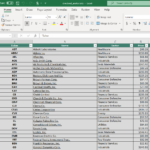
Note: The Dividend Aristocrats list is a great place to look for high quality dividend growth stocks with long histories of rising dividend payments.
I do this, because I have found that dividend income is more stable than capital gains. Plus, I want to only spend earnings in retirement, not my capital. With this type of investing, I am getting cash on a regular basis, which I can use to reinvest or spend. It is much easier to generate a return on my investment, and to stick to my investment plan, when I am paid cash every so often.
Lever #3: Time In The Market
The third important tool at your disposal is your ability to compound your investments over time. You have some control over the amount of time you will let your investments compound.
Over time, a dollar invested today, that compounds at 10%/year should double in value every seven years or so. This means that in 28 – 30 years, the investor should have roughly $16 for each dollar invested at 10%.
Of course, if the investor doesn’t allow their investments to compound, they would be worse off. Many investors are sold on the idea of long-term compounding. Unfortunately, a large portion end up trading far too often for various reasons.
One reason is fear during a bear market. Another is the desire to take a quick profit, without letting compounding do its heavy lifting for them. I have observed people panic and sell everything when things sound difficult. Another reason for selling is the attempt to time the markets or the attempts to replace one perfectly good holding for a mediocre one.
In most situations, the investor would have been better off simply holding tight to the original investment. Almost no one can sell at the top and buy at the bottom – so don’t bother timing the market. Most investors who claim that they have avoided bear markets do so, because they are often in cash. Therefore, they miss most of the downside, but they also miss most of the upside as well.
The best thing you can do is find a strategy you are comfortable with, and then stick to it. There aren’t any “perfect” strategies out there, so if you keep chasing strategies you are shooting yourself in the foot. As a matter of fact, you would likely do better for yourself if you buy long-term US treasuries yielding 3% and hold to maturity, than chase hot strategies/sectors/investments. So find a strategy, and stick to it through thick or thin.
Lever #4: Keeping Investment Costs Low
What does that mean? It means to keep commissions low. When I started out, I paid a zero commission for investments. I then switched to other brokers and tried to never pay more than 0.50%. But this is too high – there are low cost brokers today, which charge little for commissions. Try to keep costs as low as possible, because that way you have the maximum amount of dollars working for you.
It also means to make sure to minimize the tax bite on your investment income as well. Once I really spent time to learn how to minimize the impact of taxes on my investments, the rate of net worth and dividend income growth increased significantly. I have calculated that a person who maximizes tax-deferred accounts effectively in the accumulation phase could potentially shave off 2 -3 years for every ten years of saving and investing.
In order to keep costs low, the amount of fees you pay to an adviser should be eliminated. Most investment advisers out there do not know that much more than you do. If you decide to educate yourself on basic finance, you will likely know as much as most investment advisors. It makes no sense to pay someone an annual fee of 1% – 2% per year on your investment portfolio. The long – term cost of 1% – 2% fee compounds over time to a stratospheric proportion. It makes no sense to have someone who doesn’t know that much charge you 1% – 2%/year merely for holding on to your investments.
Final Thoughts
So can an investor really get rich from dividends? The answer is an emphatic yes. But one doesn’t get rich quickly from dividends.
To get rich from dividends you must practice patience and disciplined saving. It helps to prudently watch investing expenses as well. The less you spend on your investment management, the more money is left compounding in your investment account.
Finally, sticking to a dividend growth strategy for the long run is likely to produce solid results. Dividend growth investing puts your focus on the underlying business because you want to make sure the business is likely to be able to pay rising dividends far into the future.
And dividend growth investing also puts an investors’ focus on valuation. That’s because dividend growth investors prefer a higher dividend yield (lower valuation) when purchasing a stock, all other things being equal.
Dividend investing in general and dividend growth investing in particular focuses investors on two factors that matter significantly for long-term investing success: valuation and focusing on quality businesses. This focus on what matters combined with an emphasis on the ‘four levers’ presented in this article can help investors get rich – over the long run – from dividends.
Additional Reading
For investors looking for more high-quality dividend stocks, the following lists may be useful:
Thanks for reading this article. Please send any feedback, corrections, or questions to [email protected].