
Immigrants founded America, yet the path for immigrants to become U.S. citizens is harder than ever, and getting worse.
Florida’s new law aimed to identify undocumented immigrants and prosecute any who have helped them enter the country will strain the state’s businesses, hospitals, and law enforcement. Meanwhile, the U.S. citizenship test, one of the final steps to becoming an official American, is undergoing changes that could make it more difficult for non-native English speakers to pass.
These types of barriers to legal immigration, including border walls and complicated visa applications, hinder economic prosperity for immigrants and the native-born population. But America keeps discouraging immigration with more red tape because people fail to understand the economic impacts of immigration due to fear-mongering and false messaging.
Thankfully, facts and data tell the true story that the country is overall helped by immigrants.
Perhaps you’ve heard the common concern that immigrants “steal jobs” and “lower wages.” On the surface, it seems intuitive that immigrants increasing the supply of workers would yield these effects. But that’s incomplete as there is no one labor market but many labor markets depending on skills, experiences, and other criteria.
Alex Nowrasteh, vice president for economic and social policy studies with the Cato Institute and author of Wretched Refuse?, states, “To substitute natives, immigrants would have to be similar. But the competition is not even, so that doesn’t apply. Immigrants tend to have either high or low levels of education, while Americans are in the middle. There are also language differences. For immigrants who do not yet know English, they will not be selected for jobs that require verbal communication with the public.”
Immigrants are more likely to find themselves competing for jobs against other immigrants instead of native-born workers for this reason.
When immigrants move to the United States, the wages of native-born workers actually tend to increase. This is because immigrants contribute to increased demand by purchasing goods and services. As a result, businesses expand, leading to higher labor demand and wage growth for native workers.
Figure 1. Long-run relative effect of immigration on wages of native-born citizens by education
Studies have shown that immigrants are twice as likely as native-born Americans to start businesses, ranging from small enterprises to large-scale ventures. This entrepreneurial spirit increases labor demand for immigrants and contributes to greater opportunities for everyone else.
As Nowrasteh puts it, “Every argument against immigration could be an argument against native-born Americans having babies.”
When a child is born, that’s a new future worker who will grow up, enter the labor market, and could “steal” someone’s wages. Thankfully, it doesn’t work like that, and most people recognize that having children is adding to the labor market in the long term and not posing a threat to someone else’s job or wages.
Another fear often promoted to discourage easier immigration is that immigrants cost us more tax dollars. Again, it sounds believable, but studies show differently.
Not only are new immigrants barred from using safety-net programs in most instances, but also, the average immigrant consumes 27% less welfare than the average native-born American. Making immigrants the scapegoat when assessing the cost of government programs distracts from the much more prominent concern of how many U.S. citizens depend on these programs, noting the need for safety net reforms for everyone.
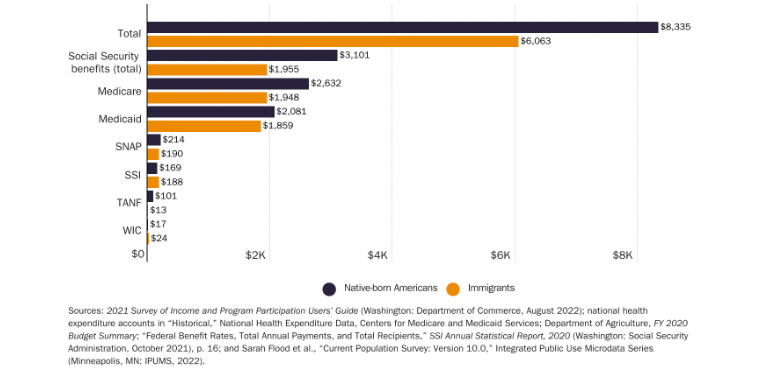
Figure 2. Average per capita welfare cost by program for native-born Americans and immigrants 2020
Regarding taxes, immigrants pay more on average and generate more federal tax revenue. Due to the varying state tax codes, immigrants may or may not pay more taxes than citizens depending on which state they live. Moreover, most immigrants enter the country in their early twenties and immediately join the workforce, making them fiscally positive contributors who don’t rely on education subsidies.
Recognizing how immigration is often misunderstood as a threat when it is actually a huge benefit is critical if Americans hope to cultivate a prosperous economy where native-born and legal migrant workers can thrive.
Restricting immigration limits the ability to work with individuals who possess the skills and talents that could enhance productivity and innovation in the long run, and the whole country suffers as a result. State and federal resources that discourage immigration would be better invested by reforming the path to immigration so that individuals who want to contribute to American society can do so with relative ease.
While reasonable exclusions for national security threats may be necessary, beyond that, discouraging immigration harms the American economy. Physical barriers like the Texas-Mexico border wall are costly to build, maintain, and patrol, are ineffective at deterring people from entering the country, and represent the illogical fear of immigration leading to worse outcomes.
Instead, reforming the visa system with a market-based approach to expand legal immigration opportunities would alleviate border chaos, reduce the black market, and enhance economic growth. New anti-immigration laws like the one in Florida will move America backward.
Vance Ginn, Ph.D., is founder and president of Ginn Economic Consulting, LLC, and chief economist or senior fellow at multiple think tanks across the country. He previously served as the associate director for economic policy of the White House’s Office of Management and Budget, 2019-20. Follow him on Twitter @VanceGinn.