Confused about where we are today?
A favorite exercise is to go back to first principles to consider how we got to where we are. (That is a favorite way to find fresh insights).
On the equity side, you have to go back a century or so. Equities were considered speculative endeavors, best suited for gamblers and punters. The exceptions? A handful of “Widows & Orphan” stocks, like Ma Bell, some railroads, utilities and the rare bank that was not suffering regular runs.
There were no disclosure rules, insider trading was rampant, and market manipulation the norm. Trading syndicates could make or break any stock, and rumors dominated the NYSE. It’s probably just the merest of coincidences that the 1929 crash and the Great Depression followed…
Soon after, World War 2 broke out; once that was resolved, 40 million GI’s returned home with cash in their pocket and the GI bill paying for college. The build-out of suburbia followed, along with the Interstate highway system, the electronics industry, automobile culture and even civilian aerospace. That powered the decades-long boom that came after the war.
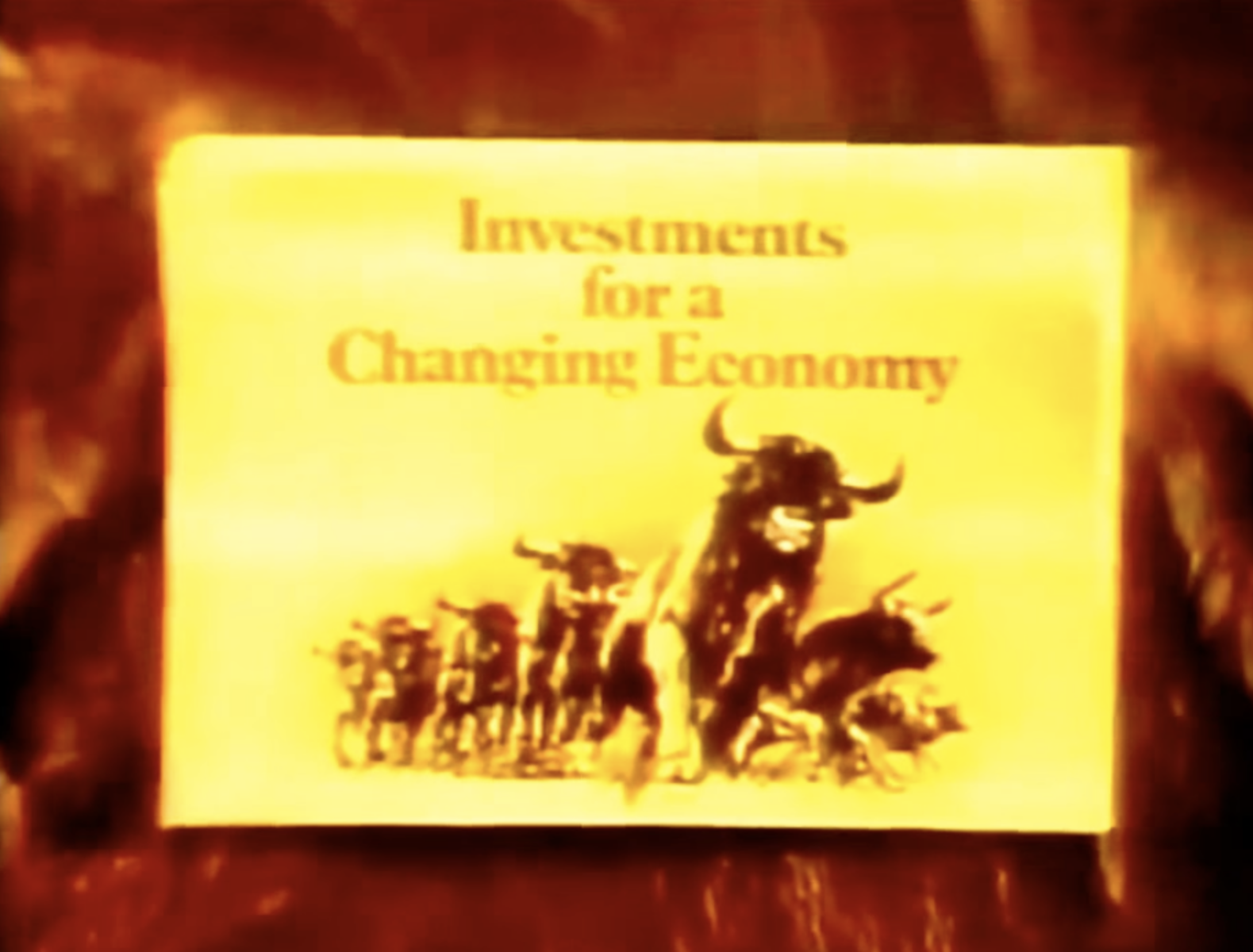
In the 1960 and 70s, Merrill Lynch was bullish on America – they set their sales staff loose trying to sell the American dream to upper-middle class households. The technology didn’t really exist to easily track performance or costs – we simply took it on faith that equities would do well over the long haul.
Trading volumes increased dramatically. By 1968. the NYSE was averaging about $4 billion in unprocessed transactions. The solution? From June 12, 1968 to December 31, 1968, the exchange was closed on Wednesdays to allow the clerks to catch up with the orders.
Trading was expensive, and the clubby brokerage industry had long indulged the large institutions at the expense of individuals. That changed on May 1, 1975, when the Securities and Exchange Commission mandated a change in commission structures. Deregulating the brokerage industry, SEC allowed trading fees to be set by market competition for the first time in more than 180 years.
Costs continued to fall: Over the next 25 years, commissions would fall from about 1.0% of the value of a buy or sell to around 0.25% of stock value. They continued to drift lower, until 2019, when Schwab became the first major firm to offer free trading. And even still, fund fees and taxes remained a major cost element.
Vanguard launched in 1974, to surprisingly little notice. They slowly accumulated some assets, but hardly moved the needle on Wall Street. Few noticed what was to become a revolution in investing.
In 1978, Congress enacted Internal Revenue Code Section 401(k), which allowed tax-deferred savings through a company-administered plan. It was mostly ignored at the time.
A new bull market broke out in 1982. It was “Morning in America,” and stocks had become attractive to an increasing portion of savers here. Over the next 18 years, the Dow would gain about 1,000% — most of those gains came from multiple expansion.
Lower trading costs, a rampaging bull market, and tax-deferred investing led to millions of new entrants into markets.
Even still, most people only had a rough idea of how they were performing. CRSP data was around, but not widely available; Bloomberg terminals launched in 1981, but were expensive and oriented towards market professionals. Data was expensive, professional analysis complex, and only a handful of companies served individual investors. Founded in 1984, Morningstar would mail out hard copies of information on various Mutual Funds; ValueLine sent looseleaf binder pages on individual companies with regular updates about Stocks. That new information arrived through the mail, once a quarter or so. S&P had a similar service.
When you wanted to buy or sell, you would call your stock broker on the phone to place an order. Every thing was done slowly and manually.
But a small handful of academics had discovered that nearly all active fund managers were not earning their keep. Whatever gains they had over the benchmark were soon consumed by their relatively high costs. During the bull market, this was more or less ignored.
Fidelity’s Peter Lynch was a rock-star stock picker and crushed all benchmarks over the next dozen or so years. Lots of other active managers did well. But again, there simply wasn’t an easy way to compare professional fund managers performance over the long haul relative to fees commissions and taxes.
The 2000s saw a few major changes: Computers had become ubiquitous and relatively cheap, data became widely available and people soon found out how well their active managers had — or had not — done. Most of the hedge fund community would be revealed post-2009 as not worth their costs.
The 1980s and 90s was a fabulous wealth-creation machine, right up until the wheels fell off the bus. First the Dotcom implosion occurred; then a series of scandals and frauds were revealed: Merrill Lynch Orange County Bankruptcy, the mutual fund scandal, the analyst scandals, the NASD Arbitration fraud, the earnings manipulation scandals, the IPO spinning scandal. This is before we get to the many many accounting frauds: Worldcom, Enron, Tyco, etc. Then came the GFC, with the implosion of Lehman Brothers, AIG, Bear Stearns, and most of the rest of Wall Street.
Among all of this, the academic research soon made it very clear: Nearly all of active management was not generating enough Alpha to justify their fees. Best of luck to anyone trying to guess the 5% that were in advance.
~~~
This history taught the average Mom & Pop investor a few things:
First, both Wall Street and its self-regulation were not to be trusted. There simply were too many criminals allowed to rob, cheat, and steal unchecked, and without consequences. There is another post entirely to be written about the arbitration scandals of the 1990s, but when the self-regulators are the biggest thieves in the room, you have a lot more than a PR problem.
First, the scandals weighed on people’s minds, then came the Great Financial Crisis. For many, the Wall Street bailouts were the last straw.
It is not a coincidence that following the GFC, Vanguard and Blackrock soon crossed a trillion dollars in assets, then doubled in size, then doubled again. The patsies at the table soon figured out they did not want to play Wall Street’s games. Their solution was to own the market, and let someone else pay a high management fee.
More to come later…
Previously:
Where Has the Retail Investor Gone? (August 25, 2012)
The Death of Active Management Has Been (Somewhat) Exaggerated, (April 5, 2017)
Why is Active Failing? (April 27, 2016)
Active vs Passive Management (Archives)
Vanguard Group (Archives)